A compact wetland and woodland learning park with boardwalks and observation points near central Gwangmyeong; seasonal ecology work, insects and wet surfaces can change the usable route. This catalogue page connects the stop to traveller ratings, current field reports, nearby regional anchors and sourced community corrections.
Each room follows the Seoul calendar day, then becomes a read-only visit record. Share current waits and practical tips without publishing your precise location. Group push notifications stay off during beta.
PLAN THE VISIT
The details that change the day.
Operator facts are labeled separately from Korea Era estimates and guidance.
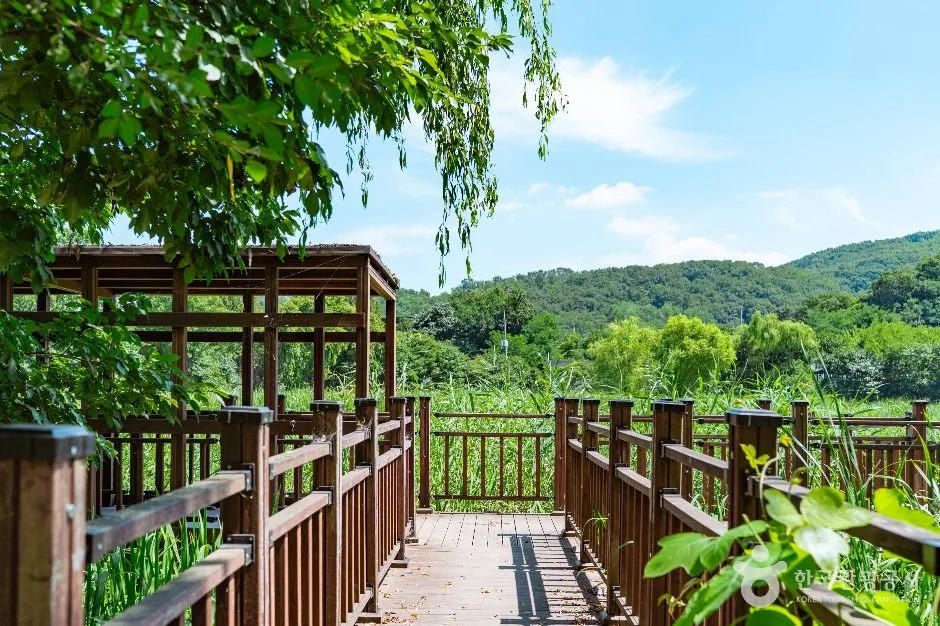
RegionGwangmyeong · GyeonggiKorean map search광명 안터생태공원Current park accessFree · open year-round · onsite safety and habitat controls prevail ↗Education programmeSeparate booking through Gwangmyeong Environmental Education Center ↗Habitat boundaryRestored 20,294㎡ inland wetland with protected amphibian, plant, fish and bird habitatParking boundaryNo dedicated visitor lot is promised; the city recommends the paid Gwangmyeong Civic Gymnasium public lotSurface boundaryWood decks and paths can be wet, icy or temporarily controlled for ecology workWildlife boundaryDo not enter habitat, feed, touch, collect plants or animals or use amplified soundPhoto scopeCurrent hero shows the real wooden observation deck overlooking trees and wetland habitat at Anter Ecological Park
It does not prove a dry route, active education session, visible wildlife, low insects, evening lighting or dedicated parking.
Checked August 30, 2026. Recheck current hours, admission, closures and transport before travel.
Map pinAudited official destination coordinate
The place coordinate is exact; use the named gate, parking area or accessible entrance for the final route.
Mobility checkTrail grade, steps, surface conditions, rest points and step-free alternatives are not assumed; check the official access notice.
DAY-OF PLAN
Know the sequence before you go.
Times from the operator are kept separate from Korea Era planning guidance.
01
Separate free park access from a booked ecology programme
The city currently lists the park as free and open year-round, while education sessions use the Gwangmyeong Environmental Education Center and require their own booking and schedule.
02
Stay on the designated habitat route
This restored urban wetland protects species including the endangered gold-spotted pond frog. Keep out of planted and water areas, remain quiet at observation points and do not collect or feed wildlife.
03
Leave before surfaces and visibility deteriorate
Wet decking, insects, heat, ice and maintenance can narrow a nominally year-round visit. The access statement does not guarantee lighting, a dry deck or a staffed visitor point.
Do I need a reservation to walk through Anter Ecological Park?
General park access is currently free and year-round; only the separate ecology education programme requires its own booking.
Will I definitely see the protected frogs?
No. It is protected habitat, not a guaranteed wildlife display. Observe quietly from designated paths and never enter or disturb the wetland.
Are the operating details for Anter Ecological Park live?
The displayed guidance was checked August 30, 2026, but it is not a live operator feed. Open the linked official guide and a Korean map again on the day because hours, closures, tickets and transport can change.
Can a traveller correct this page?
Yes. Submit a sourced community wiki correction or a current field report; proposed facts are reviewed before becoming canonical information.
KOREA ERA SHARE
Send this without forcing a sign-up
Public link · Anyone can view
Save this for your Korea tripNo account required during beta.
TRAVELLER CHANNELS
See Anter Ecological Park through a traveler's own post.
Direct links only. Korea Era does not copy the post, imply endorsement or verify live conditions from it.
A compact wetland and woodland learning park with boardwalks and observation points near central Gwangmyeong; seasonal ecology work, insects and wet surfaces can change the usable route. This catalogue page connects the stop to traveller ratings, current field reports, nearby regional anchors and sourced community corrections.Recheck the official source before visiting.
Read the full Wiki articleDetailed facts, sources and revision history
KOREA ERA WIKI
TRAVEL KNOWLEDGE DOCUMENT
Anter Ecological Park
안터생태공원A reviewed foundation built from official sources. Traveler edits are checked before publication.
Document statusReviewed foundation5 current facts0 approved edits
Global is the shared verified foundation. Country editions add approved local guidance; ratings, discussions and edit histories stay separate.
Showing the shared Global facts and Global edit history.
A compact wetland and woodland learning park with boardwalks and observation points near central Gwangmyeong; seasonal ecology work, insects and wet surfaces can change the usable route. This catalogue page connects the stop to traveller ratings, current field reports, nearby regional anchors and sourced community corrections.
Restored 20,294㎡ inland wetland with protected amphibian, plant, fish and bird habitat
Parking boundary
No dedicated visitor lot is promised; the city recommends the paid Gwangmyeong Civic Gymnasium public lot
Surface boundary
Wood decks and paths can be wet, icy or temporarily controlled for ecology work
Wildlife boundary
Do not enter habitat, feed, touch, collect plants or animals or use amplified sound
Photo scope
Current hero shows the real wooden observation deck overlooking trees and wetland habitat at Anter Ecological ParkIt does not prove a dry route, active education session, visible wildlife, low insects, evening lighting or dedicated parking.
Free · open year-round · onsite safety and habitat controls prevailChecked 1/1/2026 · Korea Era editors · source
Official links
VISITKOREA · Anter Ecological Park · catalogue checked August 26, 2026Checked 1/1/2026 · Korea Era editors · source
3. Visit flow
01
Before travel
Separate free park access from a booked ecology programme
The city currently lists the park as free and open year-round, while education sessions use the Gwangmyeong Environmental Education Center and require their own booking and schedule.
02
At the boardwalk
Stay on the designated habitat route
This restored urban wetland protects species including the endangered gold-spotted pond frog. Keep out of planted and water areas, remain quiet at observation points and do not collect or feed wildlife.
03
Before dusk or bad weather
Leave before surfaces and visibility deteriorate
Wet decking, insects, heat, ice and maintenance can narrow a nominally year-round visit. The access statement does not guarantee lighting, a dry deck or a staffed visitor point.
4. Traveler tips
Reserve an education programme separately if guided wildlife interpretation is essential; general park access does not include it.
Bring insect protection in warm months and use shoes suitable for damp decking.
Use the civic-gym public lot or public transport rather than expecting parking at the wetland edge.
Search “광명 안터생태공원” in Naver Map or Kakao Map and confirm the exact entrance and return route.
Recheck weather, trail or garden closures, last entry and seasonal conditions before departure.
The audited coordinate identifies the named destination, but the final gate, parking area and step-free entrance still need a live route check.
Do I need a reservation to walk through Anter Ecological Park?
General park access is currently free and year-round; only the separate ecology education programme requires its own booking.
Will I definitely see the protected frogs?
No. It is protected habitat, not a guaranteed wildlife display. Observe quietly from designated paths and never enter or disturb the wetland.
Are the operating details for Anter Ecological Park live?
The displayed guidance was checked August 30, 2026, but it is not a live operator feed. Open the linked official guide and a Korean map again on the day because hours, closures, tickets and transport can change.
Can a traveller correct this page?
Yes. Submit a sourced community wiki correction or a current field report; proposed facts are reviewed before becoming canonical information.