A major Palgongsan temple complex with historic halls and worship areas. This audited pin marks the official temple arrival; bus or road access, ceremonies, internal halls, mountain weather and the last return remain separate checks. This catalogue page connects the stop to traveller ratings, current field reports, nearby regional anchors and sourced community corrections.
Help the next traveller understand Donghwasa Temple.
Visitor insight appears after a real contribution, so empty counters never stand in for activity.
Ask a question or share a current update
Recent traveler reports
Answered by travellers, not checked by us. The verified facts above carry the date we confirmed them.
Loading traveller reports…
Questions about this place
Drafts can be restored in this tab and sign-in session for 24 hours. Saving does not post them; expired copies are not automatically deleted.
Question request recovery is not ready. Recheck your account and saved draft before posting.
TODAY AT THIS PLACE
Ask people visiting Donghwasa Temple today.
Each room follows the Seoul calendar day, then becomes a read-only visit record. Share current waits and practical tips without publishing your precise location. Group push notifications stay off during beta.
PLAN THE VISIT
Good to know before you visit
Operator facts are labeled separately from Korea Era estimates and guidance.
A reviewed foundation built from official sources. Traveler edits are checked before publication.
Checked September 9, 2026. Recheck current hours, admission, closures and transport before travel.
Map pinAudited official destination coordinate
The place coordinate is exact; use the named gate, parking area or accessible entrance for the final route.
Mobility checkConfirm the current step-free entrance, lift availability, rest areas and accessible toilets with the venue.
DAY-OF PLAN
Know the sequence before you go.
Times from the operator are kept separate from Korea Era planning guidance.
01
Check the temple and return route
The current listing says the temple is open year-round and 24 hours, but public transport, worship, road and national-park controls still change independently.
02
Visit the public temple precinct
Use daylight to understand the spread-out halls and outdoor Great Medicine Buddha area while following worship and conservation signs.
03
Choose one separate mountain product
Donghwasa, the cable car, Gatbawi, national-park trails and templestay are not one bundled route or admission.
Does 24-hour listing mean every Donghwasa hall is always open?
No. It describes general site access; worship, ceremonies, conservation and staff signs control individual spaces.
Does visiting Donghwasa include the Palgongsan cable car or templestay?
No. Both are separate products with their own location, schedule, price or reservation.
Does the photograph show every major Donghwasa landmark?
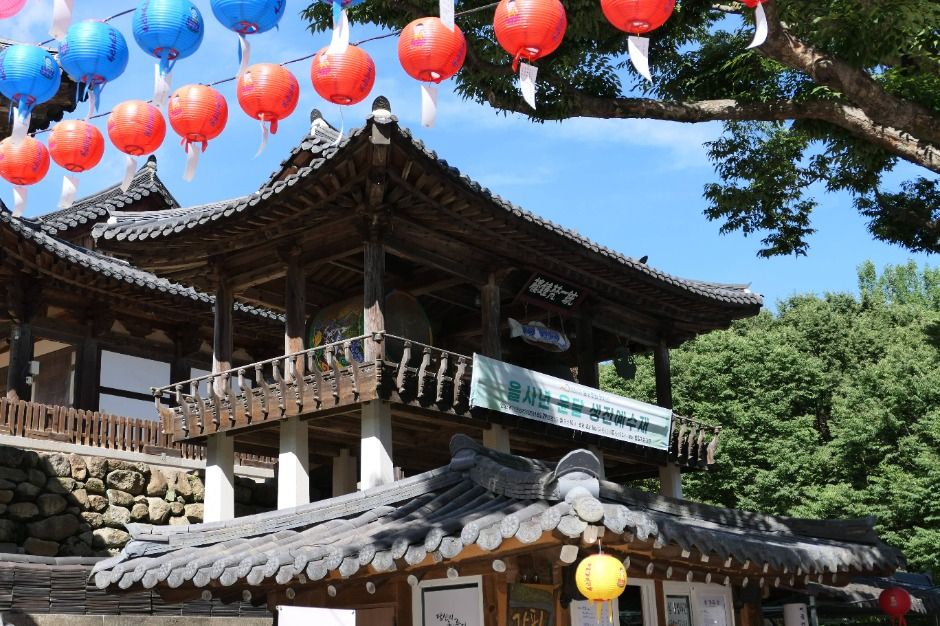
No. It shows a real painted hall and lanterns inside the temple, not the entire precinct or the Great Medicine Buddha.
Are the operating details for Donghwasa Temple live?
The displayed guidance was checked September 9, 2026, but it is not a live operator feed. Open the linked official guide and a Korean map again on the day because hours, closures, tickets and transport can change.
Can a traveller correct this page?
Yes. Submit a sourced community wiki correction or a current field report; proposed facts are reviewed before becoming canonical information.
KOREA ERA SHARE
Send this without forcing a sign-up
Public link · Anyone can view
Save this for your Korea tripNo account required during beta.
TRAVELLER CHANNELS
See Donghwasa Temple through a traveler's own post.
Direct links only. Korea Era does not copy the post, imply endorsement or verify live conditions from it.
A major Palgongsan temple complex with historic halls and worship areas. This audited pin marks the official temple arrival; bus or road access, ceremonies, internal halls, mountain weather and the last return remain separate checks. This catalogue page connects the stop to traveller ratings, current field reports, nearby regional anchors and sourced community corrections.Recheck the official source before visiting.
Read the full Wiki articleDetailed facts, sources and revision history
KOREA ERA WIKI
TRAVEL KNOWLEDGE DOCUMENT
Donghwasa Temple
동화사A reviewed foundation built from official sources. Traveler edits are checked before publication.
Document statusReviewed foundation4 current facts0 recent approved edits
Global is the shared verified foundation. Country editions add approved local guidance; ratings, discussions and edit histories stay separate.
Showing the shared Global facts and Global edit history.
A major Palgongsan temple complex with historic halls and worship areas. This audited pin marks the official temple arrival; bus or road access, ceremonies, internal halls, mountain weather and the last return remain separate checks. This catalogue page connects the stop to traveller ratings, current field reports, nearby regional anchors and sourced community corrections.
Worshippers, ceremonies and monastic areas take priorityUse side doors where instructed, keep voices low and ask before close photography.
Templestay boundary
Separate programme, reservation and participant rulesA general temple visit does not include accommodation, meals or activities.
Mountain boundary
Palgongsan cable car, Gatbawi and national-park trails require separate route and safety checksDo not treat proximity as a walkable combined attraction.
Photo scope
Current hero shows a real painted two-storey timber hall and lanterns inside DonghwasaIt does not depict every hall, the Great Medicine Buddha, templestay or today's ceremony access.
Audited official destination coordinateThe place coordinate is exact; use the named gate, parking area or accessible entrance for the final route.
Mobility check
Confirm the current step-free entrance, lift availability, rest areas and accessible toilets with the venue.
3. Visit flow
01
Before the mountain transfer
Check the temple and return route
The current listing says the temple is open year-round and 24 hours, but public transport, worship, road and national-park controls still change independently.
02
Quiet daylight hours
Visit the public temple precinct
Use daylight to understand the spread-out halls and outdoor Great Medicine Buddha area while following worship and conservation signs.
03
Before adding Palgongsan
Choose one separate mountain product
Donghwasa, the cable car, Gatbawi, national-park trails and templestay are not one bundled route or admission.
4. Traveler tips
Save the exact return bus before entering the large precinct; the temple's access listing is not a transit timetable.
Wear clothing suitable for an active Buddhist site and mountain weather, and never block worship with photography.
Choose Donghwasa, cable car or a named trail as the primary commitment before trying to combine them on a short day.
Search “대구광역시 동구 동화사1길 1 동화사” in Naver Map or Kakao Map and confirm the exact entrance and return route.
Hours, admission, closures and programme schedules can change; use the official source before departure.
The audited coordinate identifies the named destination, but the final gate, parking area and step-free entrance still need a live route check.
Does 24-hour listing mean every Donghwasa hall is always open?
No. It describes general site access; worship, ceremonies, conservation and staff signs control individual spaces.
Does visiting Donghwasa include the Palgongsan cable car or templestay?
No. Both are separate products with their own location, schedule, price or reservation.
Does the photograph show every major Donghwasa landmark?
No. It shows a real painted hall and lanterns inside the temple, not the entire precinct or the Great Medicine Buddha.
Are the operating details for Donghwasa Temple live?
The displayed guidance was checked September 9, 2026, but it is not a live operator feed. Open the linked official guide and a Korean map again on the day because hours, closures, tickets and transport can change.
Can a traveller correct this page?
Yes. Submit a sourced community wiki correction or a current field report; proposed facts are reviewed before becoming canonical information.