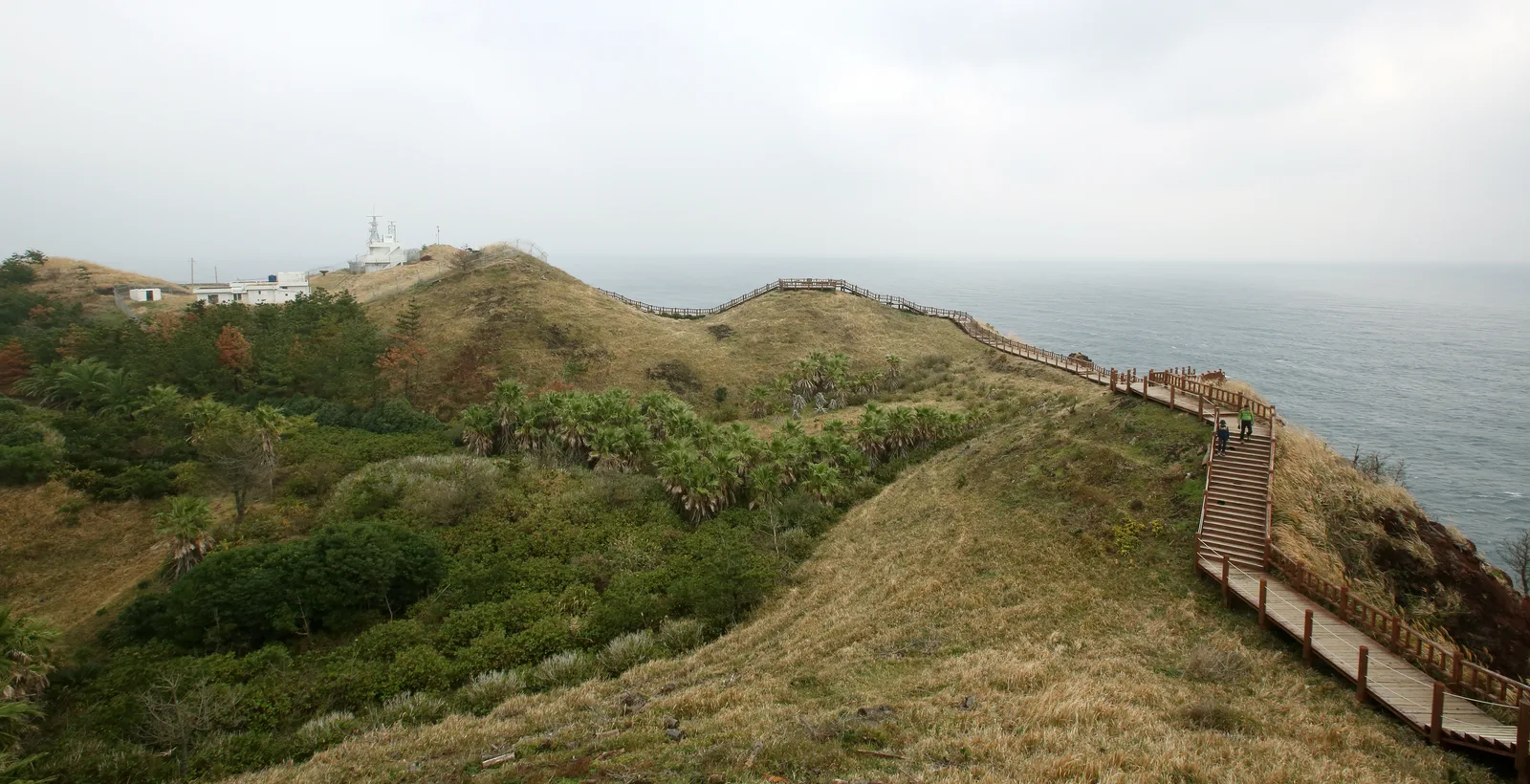
Choose one island base and one direction per day, anchor the route on a current express or trunk bus, use a transit card and tap out, and reserve a taxi gap when an infrequent final bus or long rural walk would make the return fragile.
Jeju International Airport or an island accommodation→A complete car-free day with a confirmed return
USE IT ON THE TRIP
Keep this guide for the day you need it.
Add it to an itinerary, or ask travelers when one detail may have changed since the last official check.
LAST CHECKEDAugust 22, 202622 days ago. Fares, routes and final train times change—confirm live before you travel.
WHAT TO DO
Follow the trip in order.
Scan the essentials first. Open a step only when you need the detail.
Before you go
1Choose the base before the attractionsDecide whether most days belong to Jeju City, Seogwipo, the east or the west.
Decide whether most days belong to Jeju City, Seogwipo, the east or the west. Changing sides of the island for one saved pin consumes the time that makes car-free travel work.
2Build the day around one trunk journeyFind the current airport express, intercity or trunk bus serving the main area, then add stops along that corridor.
Find the current airport express, intercity or trunk bus serving the main area, then add stops along that corridor. Use Jeju's official bus information for today's stop, direction and timetable.
Look for 제주국제공항 · 급행 · 간선 · 환승센터
After arrival
3Use the correct transit hubJeju City and Seogwipo terminals support longer north-south movement, while Daecheon and Donggwang serve useful east and west transfers.
Jeju City and Seogwipo terminals support longer north-south movement, while Daecheon and Donggwang serve useful east and west transfers. Confirm the exact stop name rather than assuming every bus enters a terminal.
4Tap out and keep a cash or card backupUse a supported rechargeable transit card and tap when leaving.
Use a supported rechargeable transit card and tap when leaving. Keep enough balance and a second payment method because top-up availability and driver communication vary.
During your trip
5Reserve the weak last segmentIf the attraction is far from the stop, the return is infrequent or sunset leaves an unlit walk, prearrange a taxi or remove that stop.
If the attraction is far from the stop, the return is infrequent or sunset leaves an unlit walk, prearrange a taxi or remove that stop. A short taxi gap can protect an otherwise workable bus day.
6Recheck weather and the final returnWind, rain, snow and mountain conditions can alter roads, flights and walking safety.
Wind, rain, snow and mountain conditions can alter roads, flights and walking safety. Check the final useful bus before entering a long trail, museum or coastal route.
COMPARE OPTIONS
Choose without rereading the page.
Option
Best for
Cost
Watch out
Bus-first corridor day
Travelers who accept fewer stops and plan around a trunk or express route.
Current bus fares · One area for most of the day
Verify both directions and the final return before leaving the hub.
Bus plus taxi gap
A rural attraction with one weak first or last segment.
Bus fare plus metered or booked taxi · More flexible
Arrange pickup where supply is limited and save the Korean address.
Prebooked taxi or charter day
A group, mobility needs or several remote stops that buses cannot connect reliably.
Provider and itinerary-dependent · Booked hours
Agree in writing on hours, route, waiting, tolls, luggage, language and cancellation.
AVOID THESE MISTAKES
4 mistakes worth remembering.
Planning east, west and Seogwipo stops in one day.
Do this instead Choose one direction and keep the stops on one transport corridor.
Reading only the outbound bus time.
Do this instead Check the return direction and final useful departure before entering the attraction.
Assuming a map pin means a practical bus entrance.
Do this instead Verify the stop side, road crossing and full walking route.
Using a taxi only after becoming stranded.
Do this instead Prearrange the weak rural segment when supply or signal may be limited.
TRAVELER FAQ
Answers before you leave.
Can I enjoy Jeju without renting a car?
Yes, if you accept fewer clustered stops, build around bus corridors and use taxis strategically for weak final segments.
Does Jeju have a subway?
No. The official Jeju guide describes buses and taxis as the main public options, with rental cars common for remote travel.
Can I use T-money on Jeju buses?
Visit Jeju says T-money can be used on Jeju buses. Confirm current top-up availability and tap when boarding and leaving.
Where should I stay without a car?
Choose the base that serves most of your planned side of the island: often Jeju City for north and airport access or Seogwipo for southern routes.
What if the last bus is too early?
Remove the remote stop, move it earlier or prebook a legitimate taxi. Do not depend on finding a car after dark in a low-supply area.
A car-free Daejeon day that separates three arrival nodes, keeps bread and old-center stops walkable, treats the science district as another corridor, and protects the final train or bus.
A privacy-safe guide to KBS Yeouido, MBC and SBS around Sangam DMC, explaining visitor halls, public plazas, mall businesses, ticket-only recordings, photography, queues, private workplace boundaries and the return route.
A traveler-first accessibility workflow for wheelchair users, people with reduced mobility, seniors and families with strollers, using verified facility details instead of a generic accessible label.
Sources & verification3 official sources · August 22, 2026
Check it yourself.
Every changing rule stays attached to the organization responsible for it.
A ten-step arrival workflow that keeps entry decisions, offline essentials, connectivity, payment, airport transport, local transit, accommodation access and help numbers current and usable.
A practical navigation setup for Korea: choosing a local map, searching Korean names, saving road addresses, reading station exits and preparing a taxi-ready address card.
How to choose between station lockers, Seoul T-Luggage storage and same-day delivery, with size checks, operating-hour limits, prohibited items and a safe handoff record.