GETTING AROUND · SUBWAY
KOREA ERA · LIVE TRAVEL BOARDSeoul detail · events across Korea · Busan and Jeju city hubs

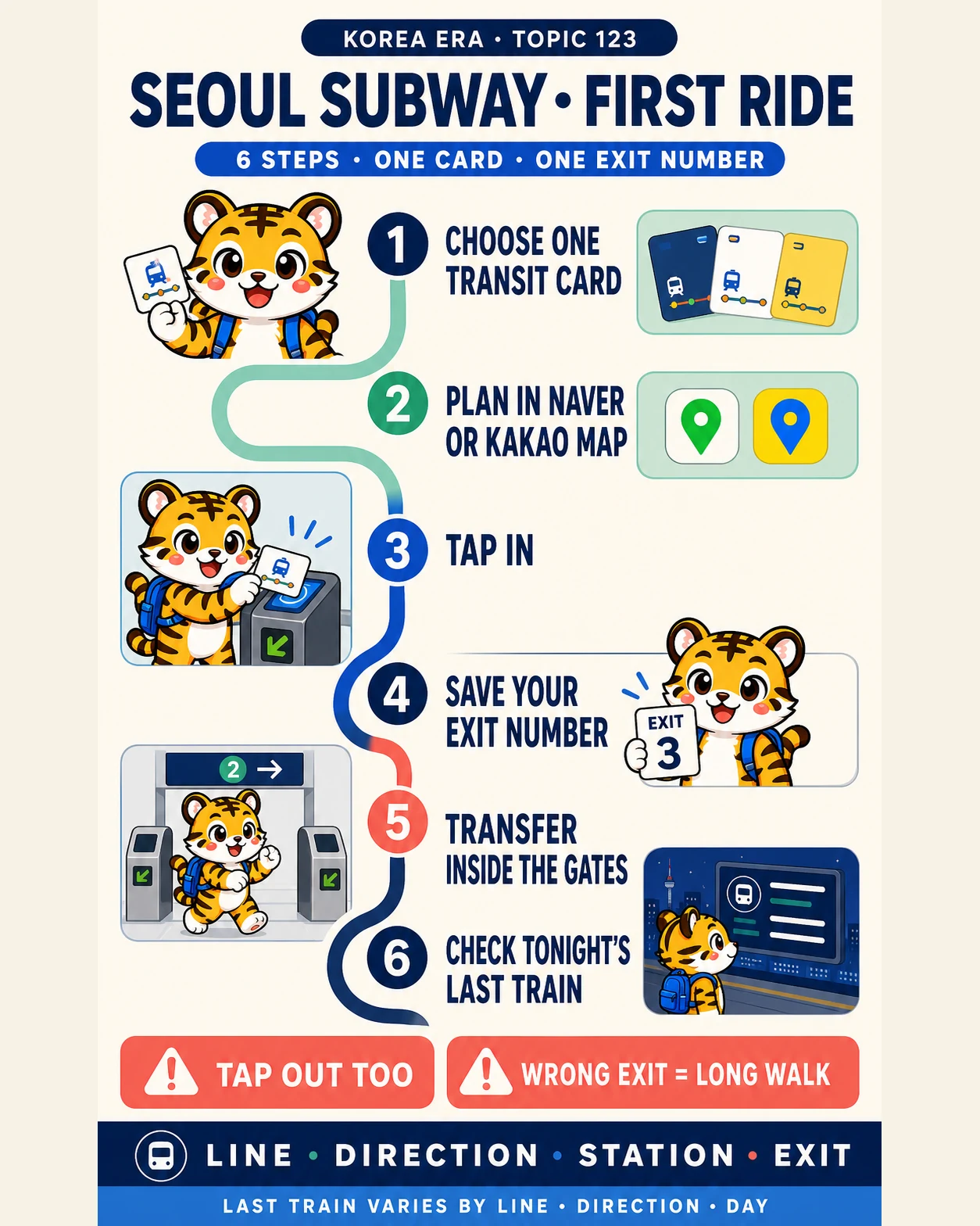
ILLUSTRATED GUIDE
Read the pictures for the route. Read the text for the numbers.
- The mascot overview explains the order of actions, not a specific station layout. Real entrances, gates and transfer corridors differ by station.
- Line colors, platform displays and Korean sign examples are wayfinding cues. The live station sign and your current route result always take priority.
- No fare, last-train time or elevator availability is taken from the artwork. Check those changeable details against the official links on the day.
STEP BY STEP
What you actually do, in order.
- 01
Save the station, line and exit before you enter
Search the trip in Naver Map or Kakao Map and write down three things: the origin station, the line and direction, and the exit number at the destination. Those three details survive even when mobile data becomes weak underground.
Look for 역 · Station · 출구 Exit
A station name alone is not enough at a large interchange. The wrong exit can put you across a major road or several blocks from the place you wanted.
This step has not been illustrated yet.
- 02
Buy or top up one transport card
Use a T-money card or another accepted transit card for both subway and bus. Check the balance before the gate and top up at a ticket machine or convenience store if needed.
Look for 교통카드 · 충전 · Transportation Card · Top-up
Traditional card purchase and top-up may require Korean cash. Do not rely on a foreign card being accepted by every machine or counter.
This step has not been illustrated yet.
- 03
Tap once and read the gate response
Place the card flat on the reader, wait for the confirmation, then walk through. If the gate refuses the card, move aside and show it to station staff instead of tapping repeatedly.
Look for 타는 곳 · 개찰구 · Subway · Gate
Repeated taps do not diagnose an empty balance, a card error or an incorrect entry record. The staffed gate is the fastest recovery route.
This step has not been illustrated yet.
- 04
Choose the platform by terminal station
Match the line color and number, then read the terminal station or the next major station shown for each direction. The same line has two directions, and both platform signs can display the same line number.
Look for 승강장 · 방면 · Platform · Bound for
Do not board from line color alone. Compare the destination sequence in your route app with the live platform sign before the train arrives.
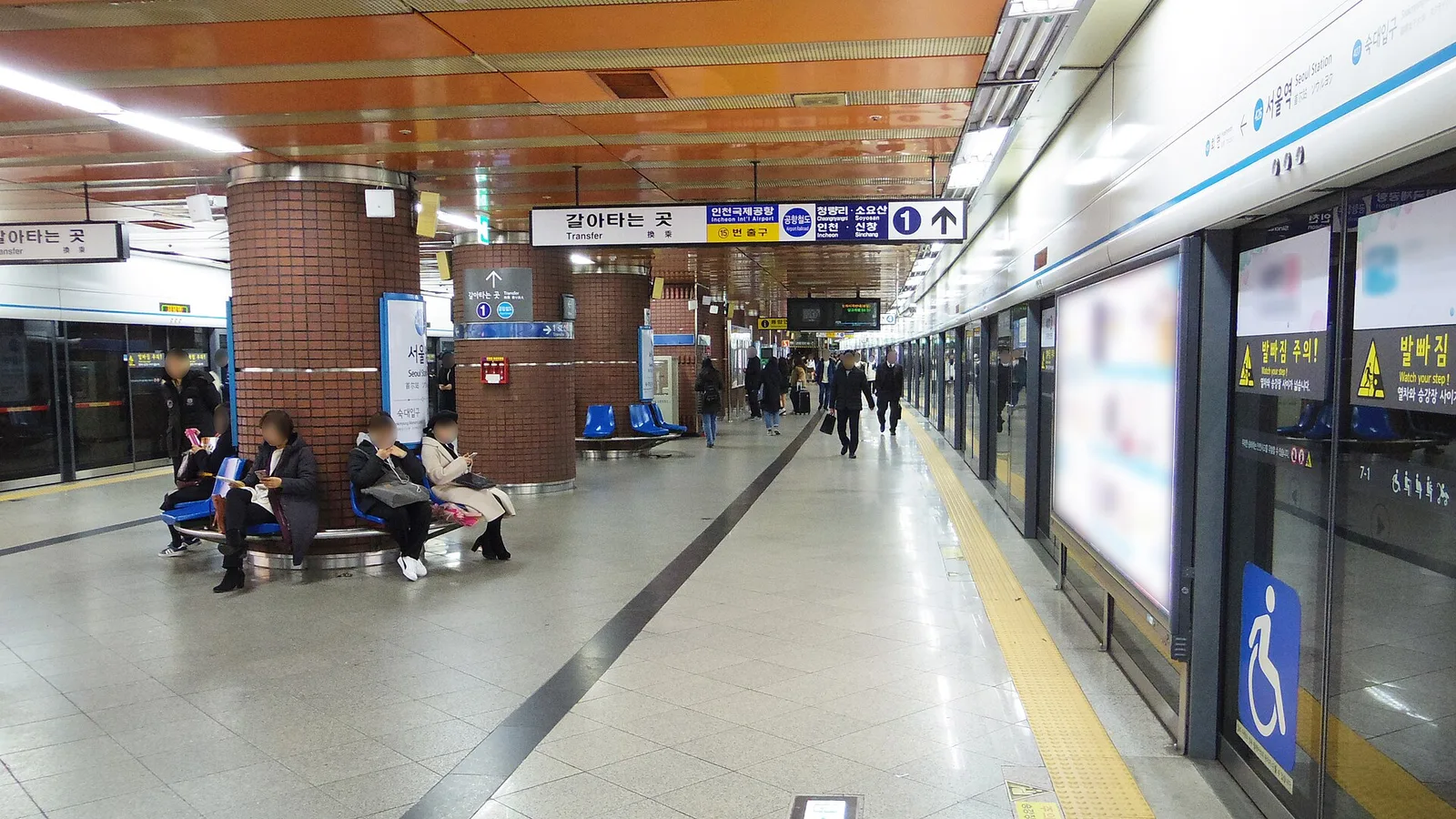
Line 4 at Seoul Station. The live line, direction and destination signs override this example.Photo: LERK · CC BY-SA 4.0 · resized · Source ↗ - 05
Stay inside the gates when you transfer
Follow the color-coded 환승 / Transfer signs to the next line without exiting to the street. At large interchanges the transfer corridor can be long, so keep following the destination line rather than the nearest exit sign.
Look for 환승 · Transfer
Leaving through a normal exit and entering again can start a new trip. Ask staff before crossing a gate if the transfer route is unclear.
This step has not been illustrated yet.
- 06
Use the accessible route when stairs are the problem
Look for the wheelchair and elevator symbol if you have large luggage, a stroller or limited mobility. The elevator entrance can be outside the nearest stairs and a lift outage can change the usable route.
Look for 엘리베이터 · Elevator · 교통약자
A route app's shortest path may include stairs. Confirm the current elevator location and service status for the station you are actually using.
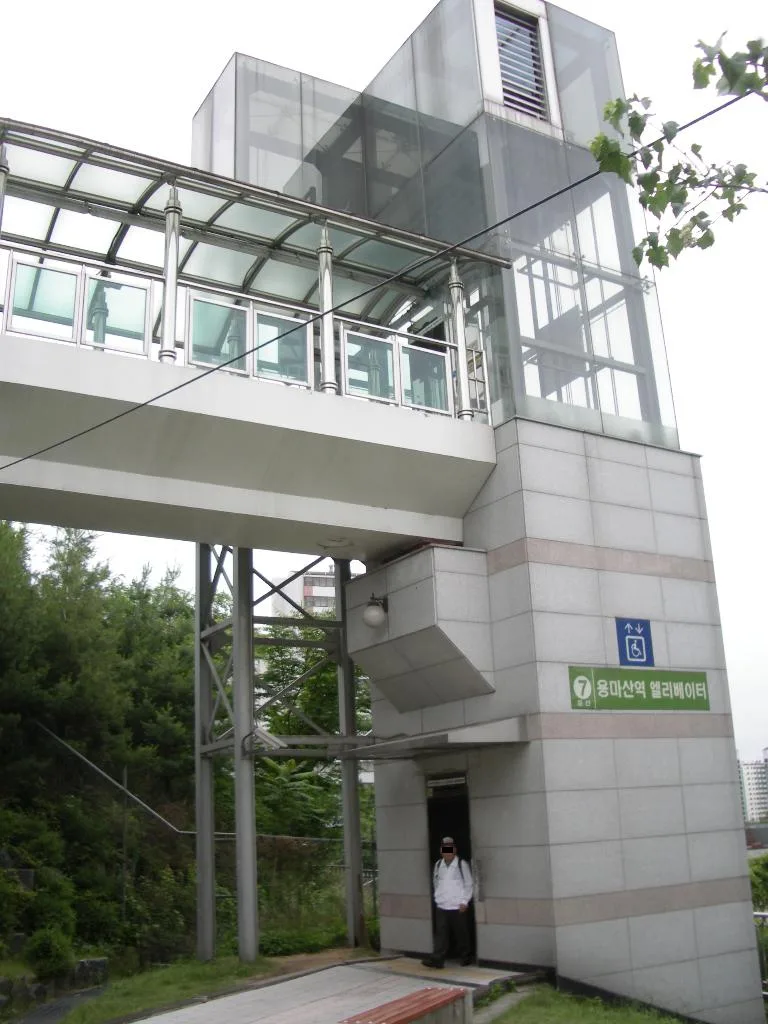
Yongmasan Station entrance elevator. Elevator positions and outages vary by station and day.Photo: Kaitak89 · CC BY-SA 3.0 · resized · Source ↗ - 07
Tap out, then follow the exact exit number
Tap the same card at the destination gate and follow 나가는 곳 / Way out signs until your saved exit number appears. Keep following that number through corridors and concourses before going up to street level.
Look for 나가는 곳 · Way out · 출구 Exit
The first staircase you see may lead to a different exit. Recheck the number before going outside, especially at a large interchange.
This step has not been illustrated yet.
- 08
Recover with staff and live information
For a card error, wrong entry or unclear transfer, use the staffed gate or station help point. For the last train, a closure or a route change, check the official station timetable and a live Korean map on the same day.
Look for 고객안내 · 역무실 · Information · Station office
Last-train times vary by line, direction and day. A remembered midnight rule or an old screenshot is not a safe travel plan.
This step has not been illustrated yet.
CHECKED FACTS
The numbers, and where they came from.
Checked 2026-07-29 against the sources below. Fares, times and services change — confirm anything that matters on the day you travel.- One card, both modes
- A single accepted transit card covers subway and city busTap at the subway entrance and exit; on buses, tap when boarding and alighting.
- Platform direction
- Match the line and the terminal-station directionLine color alone cannot distinguish the two directions.
- Destination navigation
- Save the station exit number before the rideLarge stations can have many exits and long underground corridors.
- Live checks
- Final trains and accessible routes vary by station and dayUse the official station information and a live route app when you travel.
WHERE THIS PUTS YOU
Places within reach of the far end.
Mangwon Market
망원시장
Street food, market snacks and a picnic stop near Mangwon Hangang Park.Seoul International Garden Show
서울국제정원박람회
An open-now outdoor event listed on Seoul's official visitor calendar.