KOREA ERA · LIVE TRAVEL BOARDSeoul detail · events across Korea · Busan and Jeju city hubs
Korea Era

Food trail · TOPIC 59 / 200 · CHECKED 2026-08-22

Mokpo's nine flavors — choose three, check raw, save a return

목포에서 즐기는 한국 남도 음식 여행Mokpo's official nine food categories translated into preparation, texture, seafood, bone, season and ordering decisions — so one cooked anchor, one new texture and one revisit are enough.
A respectful Mokpo seafood chooser that replaces a nine-dish challenge with three informed tastes, a complete-price check and a reason to return.
Explore the 9 foods ↓
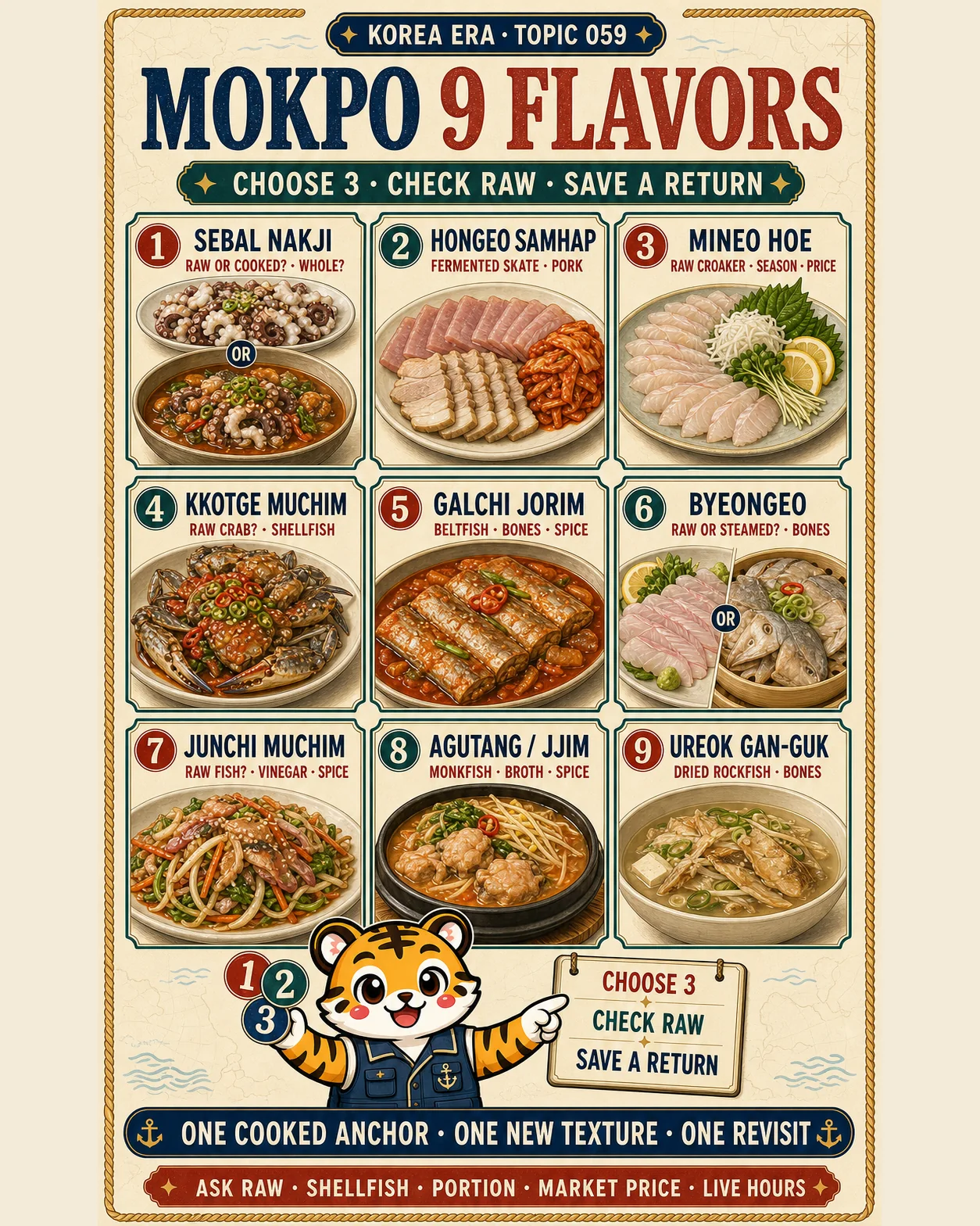
Korea Era Mokpo nine-flavors poster with nine illustrated seafood cards, raw and ordering checks, and one tiger mascot holding three choice tokens
Topic 059 · Choose three, ask what is raw and save one texture for a return. The live kitchen controls preparation, season, market price and safety.
TIME
Choose 3–4 across separate meals · never nine orders in one day
BUDGET
Menu, weight, season and party-specific · confirm the complete observed total
BEST FOR
First Mokpo food trip · seafood learners · travelers choosing raw versus cooked
MOVE
Choose one live restaurant area per meal · keep the station or accommodation return protected

THE FOOD EDIT

9 foods, each with a reason.

The groups help you choose. They are not a challenge to eat every dish or cross the city in order.
01

FIRST THREE · PREPARATION AND TEXTURE GATES

Small octopus, fermented skate or seasonal raw croaker

These are three different decisions: preparation, fermentation and raw-fish season. None is a courage test, and a cooked alternative or a polite no is always a complete choice.
  1. 01

    Sebal nakji

    세발낙지

    The name means thin-legged octopus, not an animal with three legs. Ask whether today's version is served whole, chopped, seasoned, grilled, stir-fried or in yeonpo-tang, then choose the preparation that fits your swallowing comfort and raw-seafood boundary.

    Preparation and portion-specific · ask minimum order and complete totalMolluscan seafood; raw or moving preparations require an explicit food-safety and swallowing decision, while soups and stir-fries can add fish or shellfish stock, soy, wheat, chilli and sesame
  2. 02

    Hongeo samhap

    홍어삼합

    Build one bite from fermented skate, cooked pork and aged kimchi only if all three components fit. Ask for a small portion or another skate preparation rather than turning the strong aroma and firm texture into a stunt.

    Plate, origin and portion-specific · confirm the full order before accepting extrasContains fish and pork; kimchi and sauces can add salted seafood, shellfish, soy, wheat, chilli, garlic and sesame. Makgeolli is traditional but optional and contains alcohol
  3. 03

    Mineo hoe

    민어회

    Choose raw croaker only after confirming today's species, origin, available cuts, portion and market price. Mokpo presentations can include skin or swim bladder as well as flesh, so identify every texture before agreeing to a full table.

    Often seasonal or market-priced · verify unit, portion and complete total firstRaw fish and varied parts; vulnerable travelers should follow current clinical and public-health guidance, while sauces and shared surfaces can add soy, wheat, sesame, chilli or shellfish contact
02

MIDDLE THREE · SHELLFISH, BONES AND TWO COOKING PATHS

Spicy crab, braised beltfish or raw-versus-steamed pomfret

A red sauce does not reveal whether seafood is raw, cooked or safe for a specific allergy. Ask the preparation first, then slow down for shells and bones.
  1. 01

    Kkotge muchim

    꽃게무침

    Treat the seasoned blue-crab dish as a shellfish and preparation decision. Ask whether the crab is raw, marinated, frozen, cooked or separated into meat, and how the quoted portion is intended to be shared.

    Crab, season and portion-specific · confirm market price and rice additionsCrustacean shellfish; can be raw or marinated and may contain soy, wheat, chilli, garlic, sesame or other seafood. Freezing or strong seasoning is not a personal safety guarantee
  2. 02

    Galchi jorim

    갈치조림

    Use braised beltfish as a cooked anchor when raw seafood is not your choice. Confirm spice, portion and whether rice or side dishes are included, then eat slowly because the fish sections contain bones.

    Pot and party-specific · ask whether the price is per person or per tableCooked fish with bones; sauce can contain soy, wheat, chilli, seafood stock, sugar and sesame, while side dishes may introduce additional allergens
  3. 03

    Byeongeo hoe or jjim

    병어회·찜

    Raw sliced pomfret and steamed or braised pomfret are separate choices, not one guaranteed set. State which preparation you want and confirm the whole-fish size, bones, sauce and seasonal availability.

    Species, size and preparation-specific · verify the exact plate and totalRaw or cooked fish depending on the order; bones remain relevant, and sauce or shared equipment can add soy, wheat, chilli, sesame and shellfish contact
03

LAST THREE · SEASONED FISH OR COOKED SOUP

A sharp dressed plate, a monkfish pot or a dried-rockfish broth

Finish with one dish that fits the group's appetite. Junchi can bring vinegar and fine bones; the two cooked options still require stock, portion and bone questions.
  1. 01

    Junchi muchim

    준치무침

    Ask whether the junchi is raw, cured or otherwise prepared before it is dressed with vegetables and a sweet-sour spicy sauce. Confirm the bone texture and order a portion that can be finished.

    Preparation and plate-specific · verify portion, rice and totalFish with many fine bones; dressing can include vinegar, chilli, soy, wheat, sugar, garlic and sesame, and the kitchen may share tools with shellfish
  2. 02

    Agutang or agujjim

    아구탕·찜

    Choose monkfish soup for broth or the bean-sprout-heavy spicy braise for a shared plate. They are different preparations, so ask which one is available, the smallest valid size and whether rice follows separately.

    Pot and party-specific · confirm minimum people, additions and complete totalCooked monkfish with possible bones or cartilage; broth, seasoning and shared pans can add shellfish, anchovy, soy, wheat, chilli, sesame and other allergens
  3. 03

    Ureok gan-guk

    우럭간국

    Use the clear dried-rockfish soup as a quieter cooked finish. Ask how the fish was dried, whether the bowl or pot is shared, what builds the stock and how carefully bones need to be handled.

    Bowl or shared-pot specific · confirm rice, sides and complete totalDried cooked fish with bones and potentially high salt; stock and garnish may add anchovy, shellfish, soy, wheat, egg, sesame or chilli depending on the kitchen

YOUR TASTE LIST

Keep a personal Mokpo food log.

Mark each food after you try it. Your list stays on this device.
Korea Era tiger mascot celebrating a completed route
0of 9 foods
0%

FIRST THREE · PREPARATION AND TEXTURE GATES

MIDDLE THREE · SHELLFISH, BONES AND TWO COOKING PATHS

LAST THREE · SEASONED FISH OR COOKED SOUP

No account needed. This taste list is saved only in this browser.

EDITOR’S NOTES

The choices that make this edit work.

THE RULE

Nine flavors are nine choices

Mokpo's official list is a cultural index, not one meal plan. Choose one cooked anchor, one new texture and one dish to save for the next visit.

Three informed tastes are enough
RAW GATE

Ask before the red sauce arrives

Octopus, crab, croaker, pomfret and junchi can be raw, moving, marinated, cured or cooked. The dish name and color alone do not answer the preparation question.

Raw · cooked · whole · chopped
TEXTURE GATE

Fermentation is not a dare

Hongeo's aroma and texture are part of a food tradition. Start small, never pressure a companion and choose another skate preparation or skip it without mockery.

Respect without performance
SEAFOOD GATE

Fish and shellfish are not one allergen

Blue crab is crustacean shellfish, octopus is molluscan seafood and the other dishes are fish. Sauces, broth and shared tools can connect all three.

Species and cross-contact first
PRICE GATE

Market price still needs a unit

Ask which species, origin, weight, size, number of people and preparation the quote covers. Record the complete payable total before a seasonal raw-fish table begins.

Unit · portion · total
RETURN HOOK

Save a preparation, not a queue

Record whether the return is for cooked octopus, summer croaker, steamed pomfret or a calmer soup. A specific preparation makes the next visit useful.

One unfinished question becomes a trip

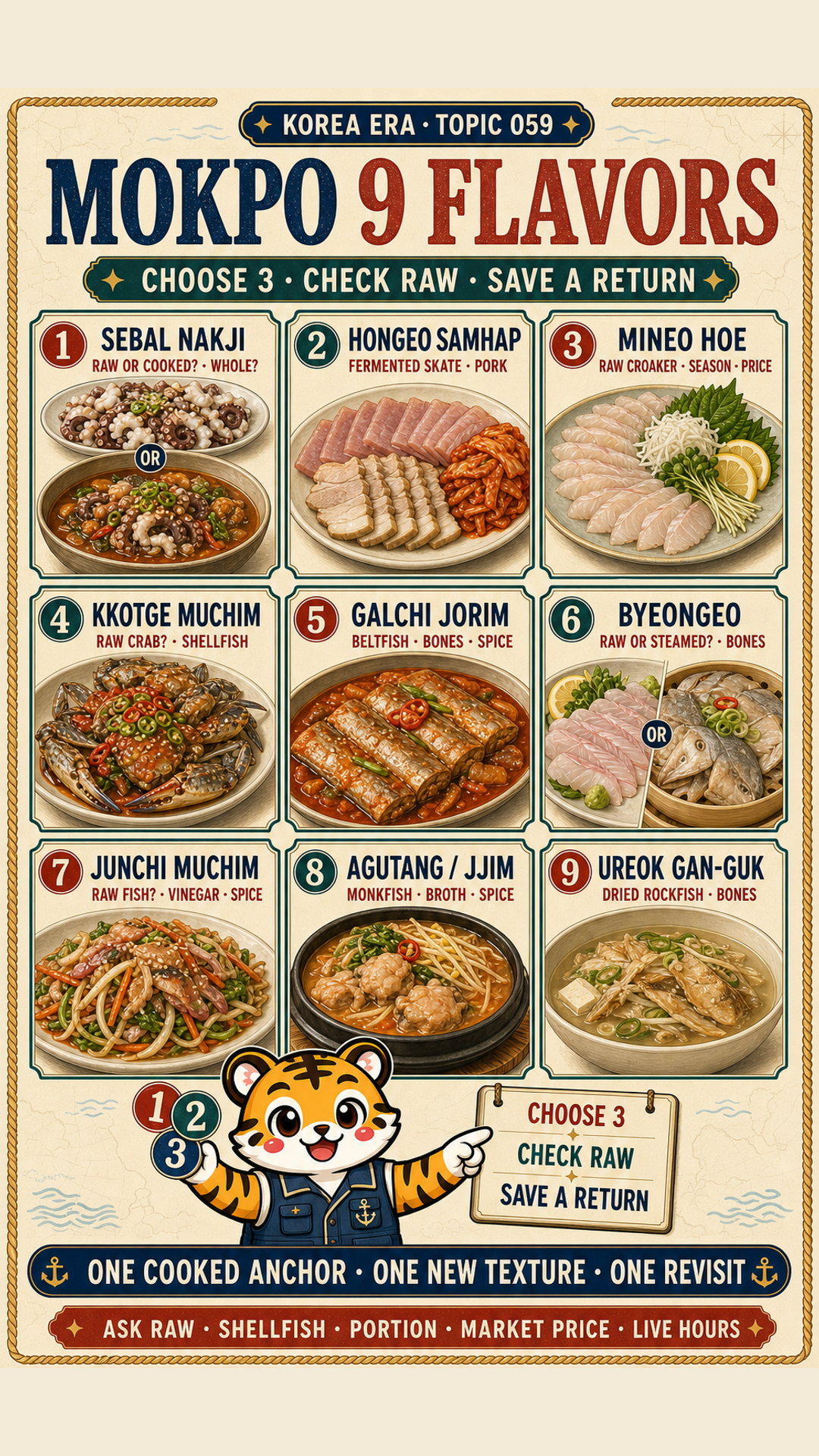
The poster is a visual memory aid. Use the structured route, live map and sources for decisions.

BEFORE YOU GO

What can still change

  • This page translates Mokpo City's nine promoted food categories into choices. It is not a nine-dish challenge, restaurant ranking, fixed route, nutrition prescription or guarantee that every category is available today.
  • Mokpo's official nine are sebal nakji, hongeo samhap, mineo hoe, kkotge muchim, galchi jorim, byeongeo hoe or jjim, junchi muchim, agutang or agujjim and ureok gan-guk. Use the official list as cultural context, then verify the live kitchen.
  • Choose three or four across separate meals: at least one fully cooked anchor, at most one unfamiliar raw or fermented texture at a time, and one preparation intentionally saved for a return.
  • Do not freeze old restaurant lists, awards, blogger prices or tourism-page claims into an evergreen post. Recheck the exact Korean business name, address, opening, break, last order, reservation, sold-out status and accessibility for the visit date.
  • Sebal in sebal nakji refers to thin legs, not three legs. The octopus can be served whole, chopped, raw, moving, seasoned, grilled, stir-fried or in soup, and those preparations are not interchangeable.
  • Never turn a whole or moving octopus preparation into a speed-eating or swallowing challenge. Travelers with chewing or swallowing concerns should choose a thoroughly cooked, cut preparation or another dish and follow professional medical guidance where relevant.
  • Hongeo samhap combines fermented skate, cooked pork and aged kimchi. Strong fermentation aroma is not an obligation, and smell alone cannot certify food safety; ask for the exact components and decline without ridicule or pressure.
  • Makgeolli can accompany hongeo in local food culture, but alcohol is optional. Confirm the beverage, strength and total; never drive, cycle or use a kick scooter after drinking.
  • Mineo hoe is raw croaker and may include skin, swim bladder or other cuts. Ask which parts are served, the species and origin, seasonal availability, portion and market-price unit before ordering.
  • Kkotge muchim contains blue crab and may be raw or marinated. Do not treat freezing, chilli, vinegar, salt or an old tourism claim as proof that it is safe for every traveler.
  • Galchi jorim is a useful cooked anchor but still contains bones. State the desired spice level, separate fish flesh carefully and confirm whether the pot, rice and banchan are priced per person or per table.
  • Byeongeo hoe and byeongeo jjim are different raw and cooked preparations. Confirm which one the restaurant is offering and whether a whole fish, bone-in plate or seasonal substitute changes the quote.
  • Junchi muchim can involve raw or dressed fish and many fine bones. Ask about preparation, vinegar, chilli, sweetness and bone texture before treating it as a simple vegetable salad.
  • Agutang and agujjim are cooked but can use fish or shellfish stock and shared cookware. Ureok gan-guk uses dried rockfish and can contain bones and substantial salt; pale broth does not prove a simple ingredient list.
  • Fish, crustacean shellfish and molluscan seafood are distinct allergy questions. Also check soy, wheat, egg, sesame, anchovy, salted seafood and cross-contact in sauces, stocks, kimchi, banchan and shared tools.
  • Food Safety Korea warns that raw or insufficiently cooked seafood can be involved in Vibrio foodborne illness. The Korea Disease Control and Prevention Agency advises high-risk people to avoid raw seafood and follow current medical guidance.
  • Pregnant, immunocompromised, older, very young or otherwise vulnerable travelers should follow current clinician and public-health advice about raw, undercooked and fermented seafood rather than a tourism graphic.
  • For market price, ask the species, origin, weight or size, number of servings, preparation fee, banchan, rice, drinks, packaging and every addition. Repeat the complete observed total before preparation begins.
  • Restaurant photos in an official list do not make the image free for commercial reuse. This campaign uses original mascot-led illustration and links to primary pages rather than copying official food photography.
  • Ask permission before filming staff, diners, tanks, kitchens, receipts, children or identifiable business interiors. Disclose sponsored, gifted or affiliate relationships on every platform where required.
  • Food waste and distress are not promotional entertainment. Order the smallest valid portion, share only under the venue's rules, stop when full and never pressure someone to eat a raw, fermented or whole-animal preparation.
  • Call 1330 for multilingual travel support, 112 for police and 119 for fire or medical emergency. Current public-health notices, clinicians, product labels and restaurant staff override this curation and its social creative.

USEFUL KOREAN

7 phrases for this edit

이 음식은 날것이에요, 익힌 것이에요?
Is this dish raw or cooked?
낙지를 잘라서 익혀 주실 수 있어요?
Can you cut the octopus and cook it thoroughly?
생선, 게, 낙지가 각각 들어가요?
Does this contain fish, crab or octopus?
이 가격은 몇 인분이고 어떤 부위가 포함돼요?
How many servings is this price, and which cuts are included?
시가의 기준이 무게예요, 한 마리예요, 한 접시예요?
Is the market price based on weight, one fish or one plate?
뼈가 많아요? 먹는 방법을 알려 주세요.
Does it have many bones? Please show me how to eat it.
추가 비용까지 포함한 전체 가격을 적어 주세요.
Please write the complete price including extra charges.

CHECKED SOURCES

The illustration is not the source.

Changing facts are linked to the public body or tourism operator responsible for them.
  1. Visit Mokpo · current official gatewayCurrent city tourism discovery and dated Mokpo Nine Flavors features; reopen live notices and linked businesses for the visit date.Open official source ↗
  2. Mokpo Culture and Tourism · official homePrimary city list of the nine food categories plus restaurant, foreign-language menu and visitor-information gateways.Open official source ↗
  3. Mokpo City · Nine Flavors introductionOfficial explanation of the nine-category promotion and category-level preparation context; old health claims are not repeated here.Open official source ↗
  4. Mokpo City · sebal nakjiOfficial explanation that sebal means thin-legged and that the octopus appears in raw, soup, seasoned, grilled and other preparations.Open official source ↗
  5. Mokpo City · hongeo samhapOfficial fermented-skate, cooked-pork and kimchi composition plus examples of other skate preparations.Open official source ↗
  6. Mokpo City · mineo hoeOfficial raw-croaker context including skin, swim bladder and other cuts plus seasonal framing.Open official source ↗
  7. Mokpo City · kkotge muchimOfficial blue-crab and seasoned-rice context; current food-safety advice overrides any old safety generalization on the page.Open official source ↗
  8. Mokpo City · galchi jorimOfficial beltfish-braise category context; the live kitchen controls bones, spice, portion and menu total.Open official source ↗
  9. Mokpo City · byeongeo hoe and jjimOfficial distinction between raw and steamed or braised pomfret preparations.Open official source ↗
  10. Mokpo City · ureok gan-gukOfficial dried-rockfish soup category context; ask the live kitchen about bones, stock, salt and portion.Open official source ↗
  11. VISITKOREA · Jeollanam-do journeyOfficial English list and translations for Mokpo's nine promoted foods.Open official source ↗
  12. VISITKOREA · Mokpo Special Tourist ZoneOfficial English coastal-city and representative-seafood context without fixing a restaurant.Open official source ↗
  13. Food Safety Korea · Vibrio foodborne illnessOfficial guidance on raw or insufficiently cooked seafood, sanitation and cross-contamination.Open official source ↗
  14. KDCA · 2026 Vibrio vulnificus preventionCurrent Korea Disease Control and Prevention Agency advice, including extra caution for high-risk people and thorough seafood cooking.Open official source ↗
  15. Food Safety Korea · allergen guidanceOfficial allergen-label and ask-before-ordering guidance; the live kitchen must answer for ingredients and cross-contact.Open official source ↗
  16. Korea Tourism Organization · 1330Official multilingual travel helpline, interpretation and visitor-support channels.Open official source ↗

NEXT EDIT

Choose another kind of day.

3 nights · 4 daysSeoul in 3 nights and 4 real days3 nights · 4 calendar daysCity dayOne first day in Seoul without crossing the city twice1 day · suggested 09:00–20:00Budget dayA full Seoul day for ₩50,0001 day · 08:30–20:30