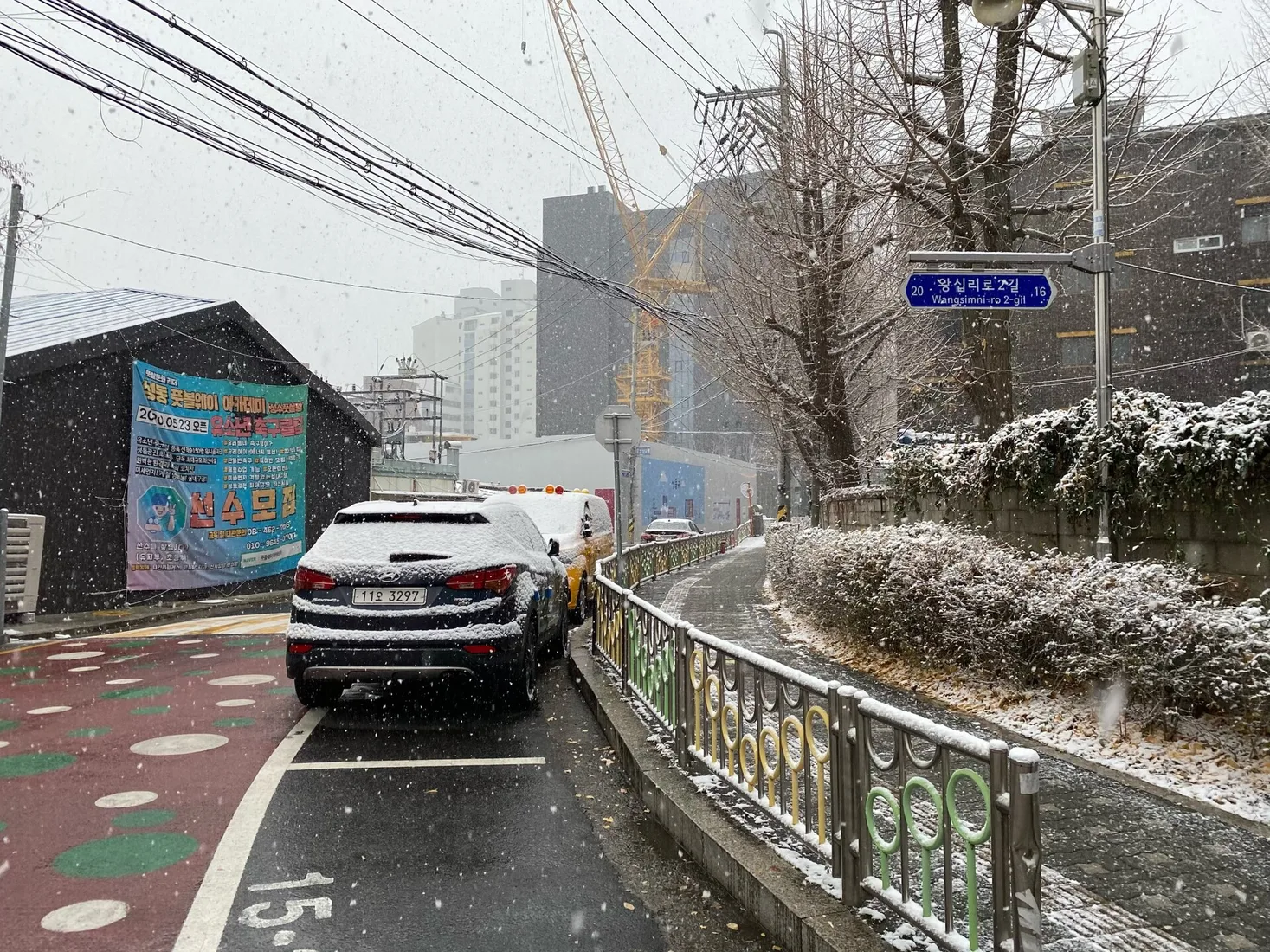
Skip to main content← All guidesA snowy street in Seongsu-dong. Snow and cold-wave alerts can change walking and transport conditions quickly.Photo: CartoonChess · CC BY-SA 4.0 · resized
SAFETY · GUIDE
Traveling in Seoul during a cold wave or snow
Check KMA warnings and transport conditions, shorten exposed walks, use layers with covered hands and head, choose main cleared routes, and move indoors immediately if numbness, confusion or extreme fatigue appears.
A Seoul itinerary during a cold-wave or heavy-snow period→A warm, shortened route using confirmed transport and cleared streets
USE IT ON THE TRIP
Keep this guide for the day you need it.
Add it to an itinerary, or ask travelers when one detail may have changed since the last official check.
LAST CHECKEDAugust 22, 202622 days ago. Fares, routes and final train times change—confirm live before you travel.
WHAT TO DO
Follow the trip in order.
Scan the essentials first. Open a step only when you need the detail.
Prepare
1Read the warning and the route togetherCheck the KMA cold-wave or snow warning, then the current subway, bus, rail or flight notice for every essential segment.
Check the KMA cold-wave or snow warning, then the current subway, bus, rail or flight notice for every essential segment. A clear sky does not prove that shaded pavements or distant routes are safe.
2Cut exposed walking before adding clothingChoose the elevator exit nearest the actual entrance, a direct bus or a taxi for the weakest link.
Choose the elevator exit nearest the actual entrance, a direct bus or a taxi for the weakest link. Keep the day inside one district rather than crossing the city for many short stops.
Act now
3Dress in adjustable dry layersCover the head, hands, ears and neck, use shoes with grip and carry dry socks or gloves when snow or slush is likely.
Cover the head, hands, ears and neck, use shoes with grip and carry dry socks or gloves when snow or slush is likely. Remove a layer indoors before sweat makes clothing damp.
4Walk for the surface you can seeUse main roads and cleared paths, take short steps, keep hands out of pockets and hold rails.
Use main roads and cleared paths, take short steps, keep hands out of pockets and hold rails. Avoid steep shortcuts, frozen stream edges and snow or icicles falling from roofs.
Follow up
5Warm up before symptoms become severeUse a confirmed heated public space or climate shelter.
Use a confirmed heated public space or climate shelter. Numb or pale extremities, slurred speech, confusion, loss of direction or extreme fatigue require immediate action and medical help.
Look for 한파쉼터 · 기후동행쉼터 · 응급실
6Protect the final connectionRecheck the final train, bus and airport route before an evening stop.
Recheck the final train, bus and airport route before an evening stop. Snow removal, traffic and flight operations can change after the day's first forecast.
COMPARE OPTIONS
Choose without rereading the page.
Option
Best for
Cost
Watch out
One-district winter day
Keeping transfers short with frequent heated stops.
Normal admission and local transport · Half or full day
Confirm each entrance, closing time and the final return route.
Indoor-first itinerary
Cold-wave alerts, heavy snow or travelers with higher cold risk.
Venue-dependent · Half or full day
The approach from the station may still be icy or exposed.
Delay the movement day
Long intercity, mountain, coastal or airport connections during disruption.
Possible change fees · Until the operator and warning improve
Change through the official operator and protect accommodation and flight connections.
AVOID THESE MISTAKES
4 mistakes worth remembering.
Following the shortest walking route after snow.
Do this instead Prefer a longer main road or staffed route that is cleared and lit.
Keeping wet socks or gloves on.
Do this instead Move indoors, dry off and replace wet layers before continuing.
Using alcohol to feel warmer.
Do this instead Use a heated space, dry layers and food or non-alcoholic hydration appropriate to you.
Trusting the morning transport plan all day.
Do this instead Recheck the operator before the final and most important connection.
TRAVELER FAQ
Answers before you leave.
Will Seoul public transport stop when it snows?
Not automatically, but individual routes, intervals and surface connections can be delayed or changed. Check the current operator notice.
Are subway platforms and passages always warm?
No. Temperatures and exposure vary, and above-ground platforms can be very cold. Keep outdoor layers reachable.
How do I avoid slipping on ice?
Use grippy footwear, cleared main paths, short steps and handrails, and avoid steep shaded shortcuts. No footwear removes all risk.
What are urgent cold-related warning signs?
Numb or pale extremities, confusion, slurred speech, loss of direction and extreme fatigue need immediate warming and medical assessment. Call 119 for severe danger.
Where can I warm up?
Use a confirmed heated public facility or a currently listed cold-wave or climate shelter. Verify location and access hours first.
A weather-first Seoul plan that separates a manageable rainy day from dangerous heavy rain, with safe rerouting, indoor alternatives, flood warning actions and official live checks.
A practical Seoul heatwave schedule with official risk checks, shaded transfers, cooling breaks, hydration, climate shelters and clear escalation for heat illness.
A coast-specific safety workflow for beaches, rocks, breakwaters, mudflats and water activities that treats lifeguards, barriers, weather and local controls as live conditions rather than scenery.
Sources & verification3 official sources · August 22, 2026
Check it yourself.
Every changing rule stays attached to the organization responsible for it.
A traveler-safe path through Korean pharmacies, clinics, hospitals and emergency care, including interpretation, medication records, bills and travel-insurance evidence.
A recoverable sequence for property lost in Korean taxis, transit, venues or streets, with Lost112 search, police reporting, phone protection, insurance evidence and passport replacement.