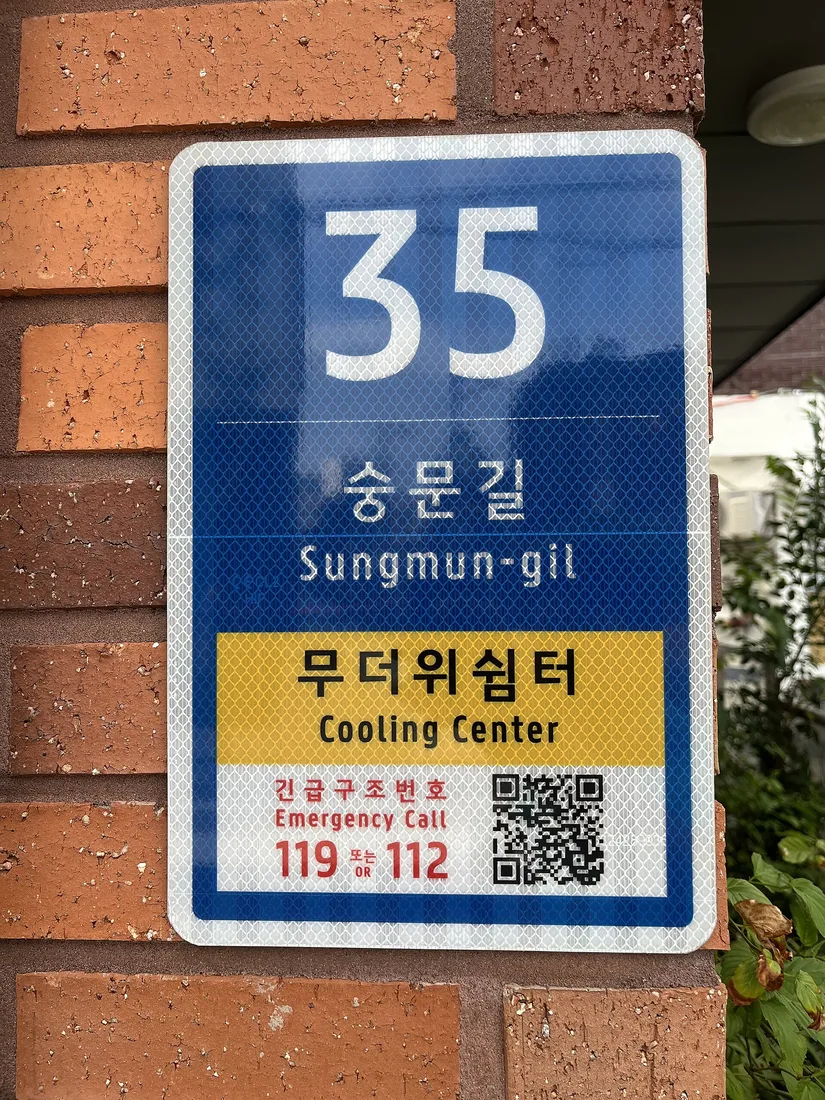
Skip to main content← All guidesAn official cooling-center sign in Mapo-gu. Confirm that the center is open before relying on it during a heat alert.Photo: Monotaxism · CC0 1.0 · resized
SAFETY · GUIDE
Traveling in Seoul during a heatwave
Check the KMA heat-risk level, move outdoor sights to early morning or evening, avoid strenuous activity from noon to 5 PM when high risk is forecast, and stop in a cooled public space at the first sign of heat illness.
A Seoul day with high apparent temperature or a heat alert→A shortened itinerary with cooling stops and a safe return
USE IT ON THE TRIP
Keep this guide for the day you need it.
Add it to an itinerary, or ask travelers when one detail may have changed since the last official check.
Avoid strenuous outdoor activity from noon to 5 PM
+
Cooling
Use a verified air-conditioned public space
LAST CHECKEDAugust 22, 202622 days ago. Fares, routes and final train times change—confirm live before you travel.
WHAT TO DO
Follow the trip in order.
Scan the essentials first. Open a step only when you need the detail.
Prepare
1Check heat risk, not only the temperatureUse the KMA impact-based forecast for the city and day.
Use the KMA impact-based forecast for the city and day. Note the apparent-temperature risk, warning period and overnight low before deciding how much outdoor walking is reasonable.
2Move the hardest walk to the coolest windowPlace exposed palaces, hills, markets and photo walks early, then reserve the middle of the day for one air-conditioned indoor stop.
Place exposed palaces, hills, markets and photo walks early, then reserve the middle of the day for one air-conditioned indoor stop. Shorten transfers instead of preserving every saved pin.
Act now
3Build cooling into the routeConfirm a staffed indoor facility, subway station or listed climate shelter before each outdoor segment.
Confirm a staffed indoor facility, subway station or listed climate shelter before each outdoor segment. Carry water, wear light breathable clothing and use shade, a hat and sun protection.
4Eat and drink before you feel depletedTake regular water and cooling breaks.
Take regular water and cooling breaks. Alcohol and a packed cafe queue are not substitutes for hydration and a reliably cooled place.
Follow up
5Stop at the first concerning symptomsEnd the walk if dizziness, headache, nausea, unusual weakness or cramps develop.
End the walk if dizziness, headache, nausea, unusual weakness or cramps develop. Move to a cool place, loosen clothing and seek help; call 119 for confusion, collapse or severe symptoms.
Look for 무더위쉼터 · 기후동행쉼터 · 응급실
6Recheck the journey homeHeat can make a familiar final walk unsafe.
Heat can make a familiar final walk unsafe. Choose an elevator exit, bus or taxi that reduces exposure and do not wait on an unshaded platform longer than necessary.
COMPARE OPTIONS
Choose without rereading the page.
Option
Best for
Cost
Watch out
Split-day itinerary
Keeping one outdoor highlight while avoiding peak heat.
Normal admission and transport · Early morning plus evening
Confirm evening closing and final transport before taking a long midday break.
Indoor district day
A warning day when outdoor walking should be minimal.
Venue-dependent · Half or full day
Do not assume every station-to-venue connection is indoors or air-conditioned.
Rest and reschedule
Illness, high vulnerability or danger-level conditions.
Possible booking change fees · Until conditions improve
Health takes priority over a non-refundable attraction or photo plan.
AVOID THESE MISTAKES
4 mistakes worth remembering.
Judging the day by air temperature alone.
Do this instead Use the official apparent-temperature and impact-risk forecast.
Saving all outdoor stops for one midday block.
Do this instead Keep only the highest-value stop and move it to a cooler window.
Assuming every convenience store is an official climate shelter.
Do this instead Use the current city listing and confirm the location and access hours.
Trying to walk through dizziness to keep the schedule.
Do this instead Stop, cool down and escalate promptly when symptoms are severe or worsening.
TRAVELER FAQ
Answers before you leave.
What is the best time for outdoor sightseeing during a heatwave?
Use the coolest available early-morning or evening period shown in the current forecast, and check the venue's actual opening hours.
Where can I cool down in Seoul?
Use a confirmed air-conditioned public facility or a currently listed heatwave or climate shelter. Locations and access hours can change.
Is iced coffee enough for hydration?
Do not make one drink your only plan. Carry water, take regular cooling breaks and consider your own medical or dietary needs.
When should I call 119?
Call for collapse, confusion, loss of consciousness, severe or rapidly worsening symptoms, or when the person cannot reach safety.
Should I keep a prepaid outdoor booking?
Only if conditions, your health and the operator's current safety guidance make it reasonable. A booking does not override an official warning.
A weather-first Seoul plan that separates a manageable rainy day from dangerous heavy rain, with safe rerouting, indoor alternatives, flood warning actions and official live checks.
A winter safety workflow for Seoul covering cold-wave checks, icy pavements, snow disruption, warm indoor stops, clothing, transport fallbacks and urgent warning signs.
A coast-specific safety workflow for beaches, rocks, breakwaters, mudflats and water activities that treats lifeguards, barriers, weather and local controls as live conditions rather than scenery.
Sources & verification3 official sources · August 22, 2026
Check it yourself.
Every changing rule stays attached to the organization responsible for it.
A traveler-safe path through Korean pharmacies, clinics, hospitals and emergency care, including interpretation, medication records, bills and travel-insurance evidence.
A recoverable sequence for property lost in Korean taxis, transit, venues or streets, with Lost112 search, police reporting, phone protection, insurance evidence and passport replacement.