SEOUL · MYEONG-DONG
Myeongdong
명동
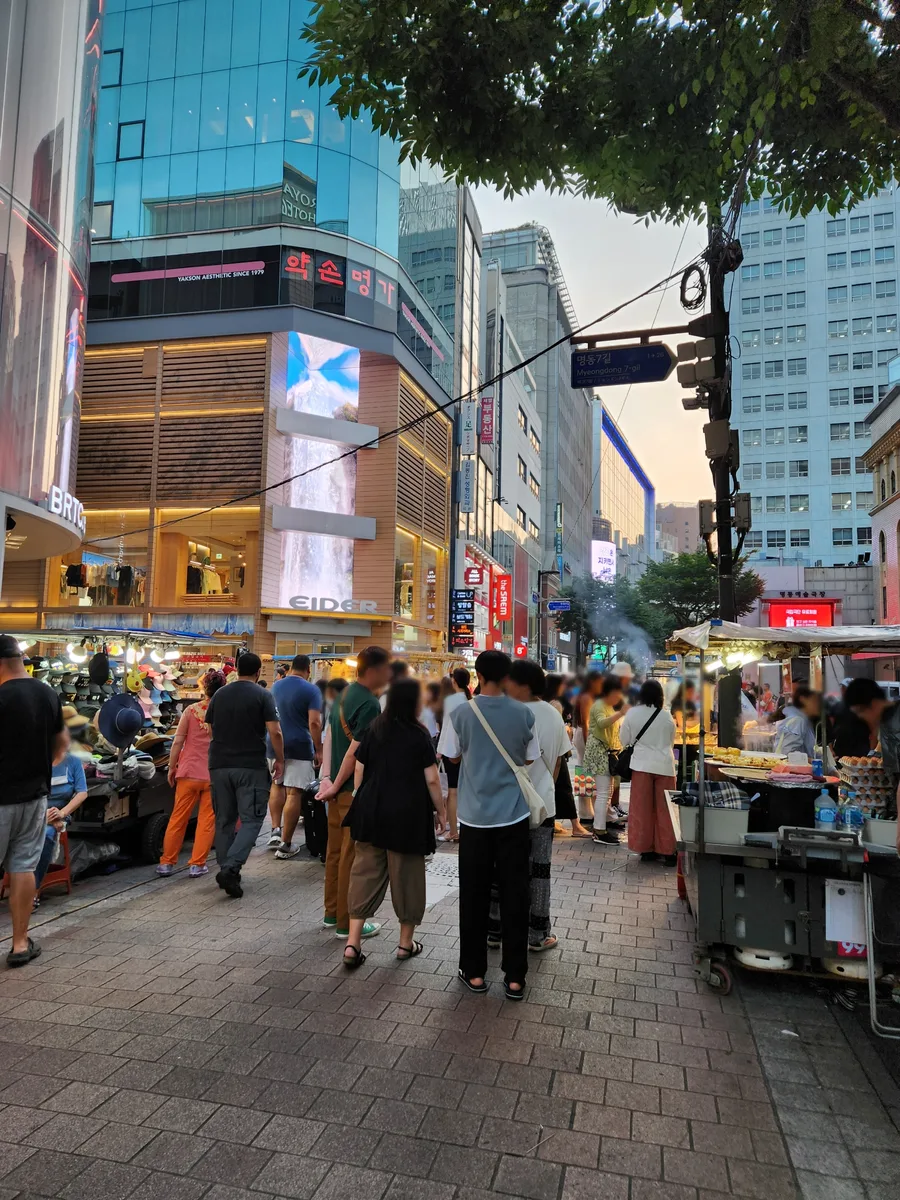
First-trip shopping and central connections. A practical base for airport buses, street food, Namsan and central Seoul day trips.
 ← Korea map
SEOUL · MYEONG-DONG
명동
First-trip shopping and central connections. A practical base for airport buses, street food, Namsan and central Seoul day trips.
24 VERIFIED RECORDS
Built in 1898 and the first Gothic building in Korea; the main hall is open to visitors on weekdays only.
A dense central district for shopping, food and easy onward connections.
A vast market with cutlassfish, kalguksu and street-snack alleys near Sungnyemun.
Korea Tourism Organization's free K-content and travel-information hub beside Cheonggyecheon. Floors 1–4 and floor 5 use different weekly schedules, the Tourist Information Center closes earlier, and paid programmes may operate separately, so check the exact floor and activity before travelling.
The observation tower on Namsan, reached by cable car or on foot.
A compact palace beside City Hall that carries the transition from late Joseon rule into the Korean Empire.
A below-street walking route through central Seoul, especially useful after dark.
A Romanesque Revival cathedral beside Seoul City Hall whose brick and granite structure combines Western church planning with Korean architectural details; visitor access is listed 11:00–16:00, but this is an active place of worship, so services, funerals and parish use take priority, dress respectfully, keep voices low and ask before photographing interiors.
The restored former Seoul Station building hosts dated exhibitions, performances and architecture tours rather than operating as a continuously open concourse. It is closed for exhibition preparation on August 29, 2026 and the next exhibition is announced for September 17–November 1, so check the live programme before crossing the active station precinct.
A lived-in web of narrow hanok lanes where small cafés, restaurants and shops occupy adapted traditional houses. There is no single gate or shared opening time: choose a named business, expect queues at busy periods, keep resident doorways clear and never treat a private hanok as a public photo set.
The civic square between Gwanghwamun Gate and central Sejong-daero, paired with nearby Cheonggye Plaza in the national selection.
A covered market known for bindaetteok and mayak gimbap, eaten standing at the stall.
Craft shops, tea houses and galleries on one walkable street.
The Seoul alley most closely associated with jokbal, where veteran restaurants serve sliced braised pig's trotters with wraps and side dishes; opening days, waits and portions vary by shop and there is no dedicated alley parking, so choose the exact restaurant, confirm pork and shrimp-paste allergens, price and last order, and use transit for the simplest return.
Lived-in hanok streets between the two palaces. People's homes, so quiet hours apply.
A steep hillside neighbourhood below Namsan shaped by post-liberation settlement, narrow residential lanes and a changing mix of cafes, workshops and international restaurants; public streets are always accessible, but this is a lived-in area with difficult slopes and limited parking, so use transit, keep noise low, avoid photographing homes and save exact businesses before climbing.
The restored western secondary palace offers a quieter history stop between Seodaemun and Gwanghwamun.
The largest of the five palaces, and the one with the changing of the guard.
Zaha Hadid's exhibition complex, with a late-night design market outside.
A covered neighbourhood market near Seoul Station and Hyochang Park with produce, prepared food, side dishes and long-running local stores; shops choose their own hours and closures, and card use and parking may be available only at particular businesses or facilities, so confirm the exact vendor, price and allergens before ordering.
The eastern royal palace built for members of the royal family, directly connected to Changdeokgung's historical complex.
A busy covered market between Dongnimmun and Seodaemun Station, known for prepared foods, produce, rice cakes and neighbourhood shopping. Popular snack stalls can queue while every vendor keeps separate hours and ingredients, so compare posted prices, ask about allergens and portions and keep pedestrian lanes clear.
A UNESCO World Heritage palace; the rear Secret Garden is a separate timed ticket.
A sloped dining and cafe corridor between Noksapyeong and Namsan, with independent venues spreading into side lanes; the street itself is always open but businesses change quickly and keep individual hours, so check recent listings, reservation or queue rules, menu prices and the uphill return route instead of relying on an old restaurant roundup.
BEFORE YOU GO
Match the domestic or international terminal first, then compare the complete live rail, bus and designated-taxi route to the exact Korean accommodation entrance.
Confirm your terminal and exact accommodation, compare each option door to door with live service, then board only after matching the ticket, platform or stand and keeping a late-arrival fallback.
Save the exact Korean destination, verify the live line and direction, use a compatible transit product, and keep the final exit, bus stop and last useful departure in the same route plan.
Plan the complete step-free chain—vehicle, station elevator, pavement, entrance, restroom and return route—confirm each facility shortly before travel, and reserve Seoul Danurim support early when an accessible vehicle or assistive device is essential.
For ordinary rain, rebuild the day around one or two confirmed indoor stops; for a heavy-rain or flood alert, stop sightseeing, avoid streams, slopes, underpasses and flooded roads, and follow KMA and Seoul emergency instructions.
Check the KMA heat-risk level, move outdoor sights to early morning or evening, avoid strenuous activity from noon to 5 PM when high risk is forecast, and stop in a cooled public space at the first sign of heat illness.
Check KMA warnings and transport conditions, shorten exposed walks, use layers with covered hands and head, choose main cleared routes, and move indoors immediately if numbness, confusion or extreme fatigue appears.
Stop chasing a departed connection, confirm your Korean destination and live night-bus route, compare the current taxi fare and pickup, and wait only in a safe staffed place while protecting your phone battery.
Choose the exact Hangang park and subway exit, check today's weather and park notices, use only current permitted tent and delivery zones, keep clear of bicycle paths and the river edge, and leave with every item and sorted bag of waste.
Choose the palace and return route before the rental shop, compare the complete time, deposit and late-return terms, wear a proper upper and lower hanbok that meets the palace guideline, save the shop details and return time, and check each palace's live admission and reservation rules.
Compare KTX, SRT, conventional KORAIL trains, express buses and a Gimpo-to-Gimhae flight by your real door-to-door time, departure point, luggage and live fare before booking.
Choose a real public purpose such as the KBS Visitor Hall, Sangam Cultural Plaza or an ordinary MBC Mall business; enter a recording only through its current official ticket notice, and exclude staff doors, vehicle gates and person-tracking from the trip.
Check passport-based entry rules on official pages, save an offline arrival pack, then compare connectivity, payment, airport transport, transit and first-night access for the exact trip.
Call 112 for police response to crime or danger, 119 for fire, rescue or emergency medical dispatch, and use 1330 only for non-emergency travel information and interpretation.
RECENT FIRSTHAND UPDATES
OTHER AREAS