Home Food Restaurant cards Map MICHELIN 2022–2026 Markets How to order Restaurant etiquette Restaurant or dish Region All 17 regions Busan Jeju Seoul Sort restaurants Recommended Highest rated Nearest to me Most reviews Most written reviews Name A–Z
More filters City All Korea Busan Jeju Seoul Food type All food types Beef Chicken Dumplings Fine dining Japanese Korean Korean BBQ Local classic Noodles Pork Seafood Soup Source All sources Official tourism picks MICHELIN Stars Korea Era listings Distance Any distance Within 1 km Within 3 km Within 5 km Within 10 km Within 25 km
26 source-checked restaurants ready to explore
How recommendations and sources work Search official tourism picks, MICHELIN Star records and published Korea Era listings together. Paid placement does not boost this order.
“Recommended for travelers” balances practical usefulness, source quality, Korea Era review evidence, solo fit, published access details, recency and the selected region or distance. MICHELIN is one signal, not the default lane. Review-count and rating sorts use only Korea Era quick reviews; places with fewer than three quick reviews keep their rating private.
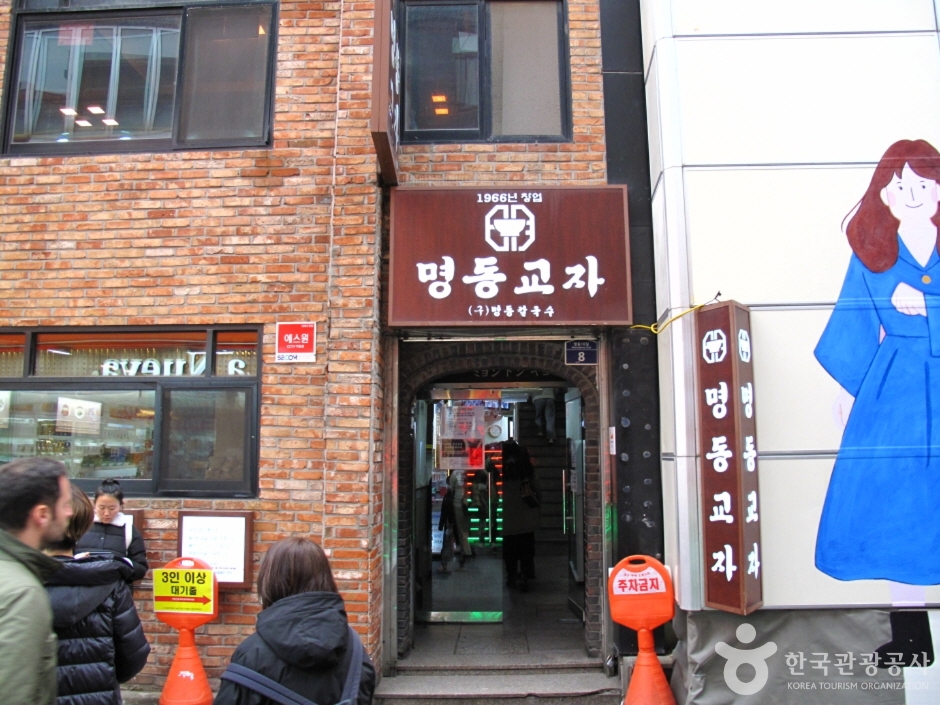
Licensed official/source photo. Photo: © Korea Tourism Organization · TourAPI content 403053 · image 3111400 · Korea Open Government License Type 3 · original bytes · no modification SOURCE-CHECKED LISTING
Seoul · Jung-gu
명동교자 29 Myeongdong 10-gil, Jung-gu, Seoul Noodles Dumplings Local classic Start with Kalguksu · Mandu · Bibim-guksu
VISITKOREA calls this long-running Myeongdong restaurant a staple and highlights its kalguksu and mandu for travelers.
Be the first to review
The official listing currently says 10:30–21:00 and cards accepted. Recheck the same day before making a special trip.
Source checked 2026-08-23. Hours are not live; verify before travel. Save this place
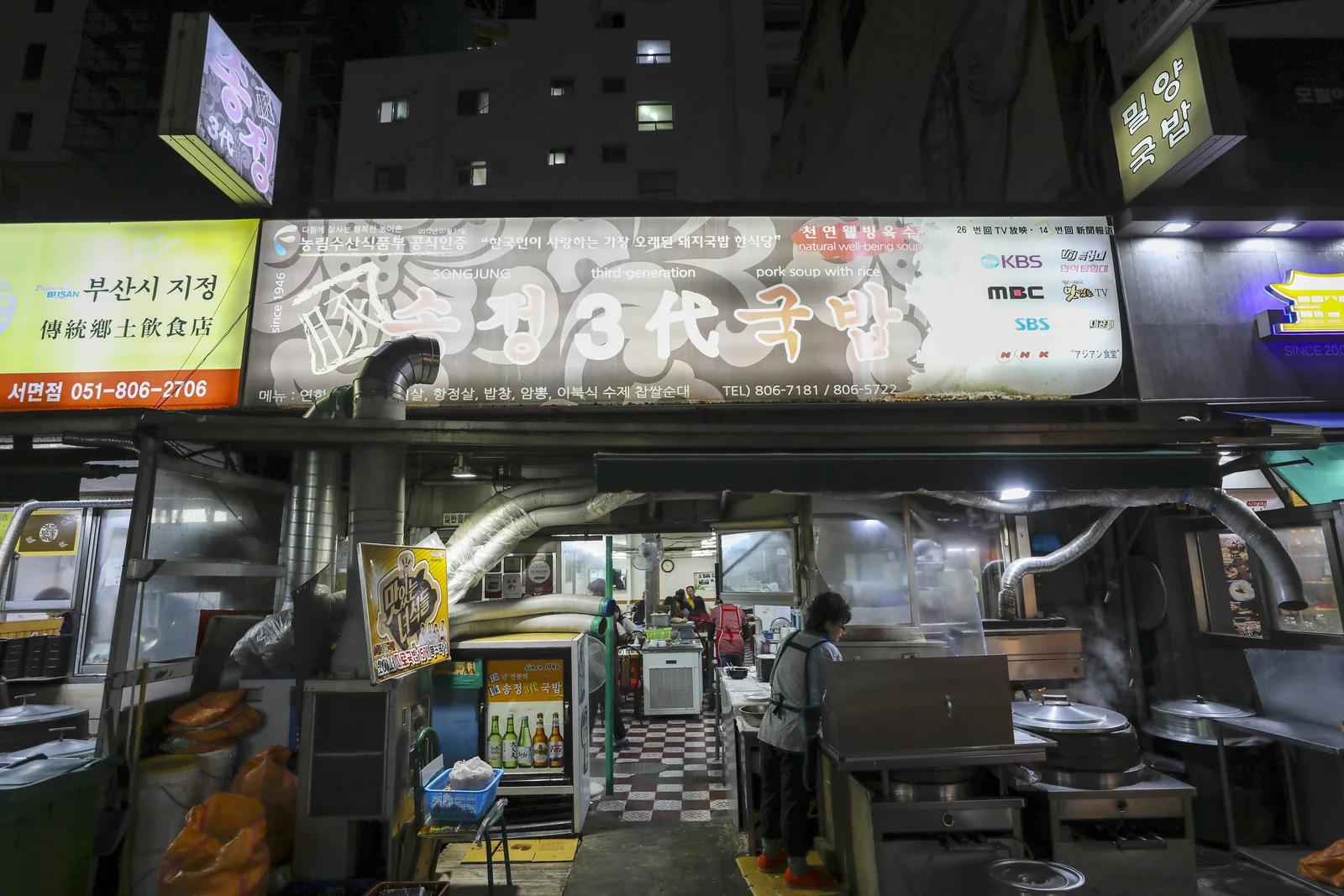
Licensed official/source photo. Photo: bryan... · 2018 · Creative Commons Attribution-ShareAlike 2.0 · resized WebP SOURCE-CHECKED LISTING
Busan · Busanjin-gu
송정3대국밥 33 Seomyeon-ro 68beon-gil, Busanjin-gu, Busan Start with Dwaeji-gukbap · Chapssal sundae · Suyuk
Visit Busan presents this 80-year Seomyeon alley restaurant as one of the original places for the city's pork-and-rice soup.
Be the first to review
The official city page currently lists 24-hour service with Lunar New Year and Chuseok closures. Reconfirm before a late-night visit.
Source checked 2026-08-23. Hours are not live; verify before travel. Save this place
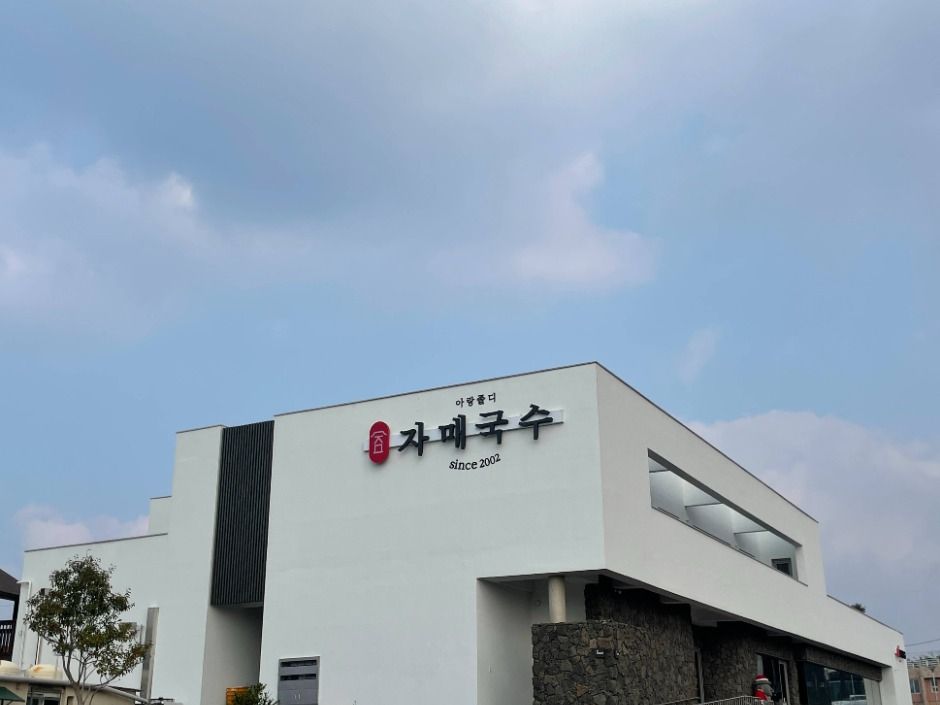
Licensed official/source photo. Photo: © Korea Tourism Organization · TourAPI content 3497636 · image 3497609 · Korea Open Government License Type 3 · original bytes · no modification SOURCE-CHECKED LISTING
Jeju · Jeju-si
자매국수 본점 46 Hanggollam-gil, Jeju-si, Jeju-do Start with Gogi-guksu · Bibim-guksu · Dombe-gogi
Visit Jeju calls this a premier must-visit pork-noodle restaurant drawing many tourists and recommends it near the airport.
Be the first to review
The official page currently lists a 14:30–16:10 break, 17:50 last order and Wednesday closure, while warning the pre-break cutoff can vary.
Source checked 2026-08-23. Hours are not live; verify before travel. Save this place
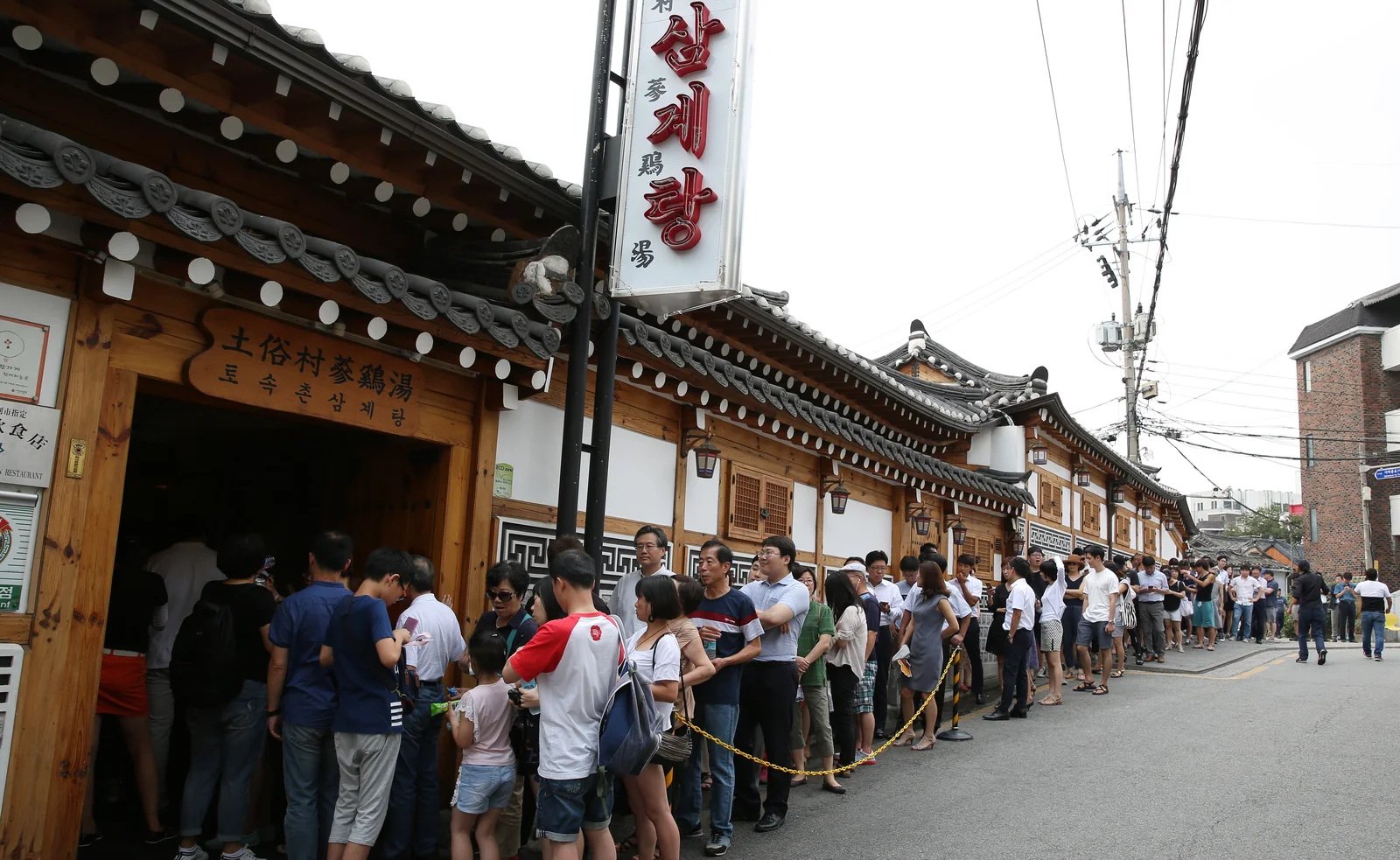
Licensed official/source photo. Photo: Korea.net / Korean Culture and Information Service · Jeon Han · 2016 · Creative Commons Attribution-ShareAlike 2.0 · resized WebP SOURCE-CHECKED LISTING
Seoul · Jongno-gu
토속촌 삼계탕 5 Jahamun-ro 5-gil, Jongno-gu, Seoul Start with Samgyetang
The official Seoul guide describes it as a famous hanok samgyetang restaurant near Gyeongbokgung visited by many foreign tourists.
Be the first to review
The Seoul listing currently says daily 10:00–22:00 and English, Japanese and Chinese menus. Expect a queue at busy times and reconfirm hours.
Source checked 2026-08-23. Hours are not live; verify before travel. Save this place
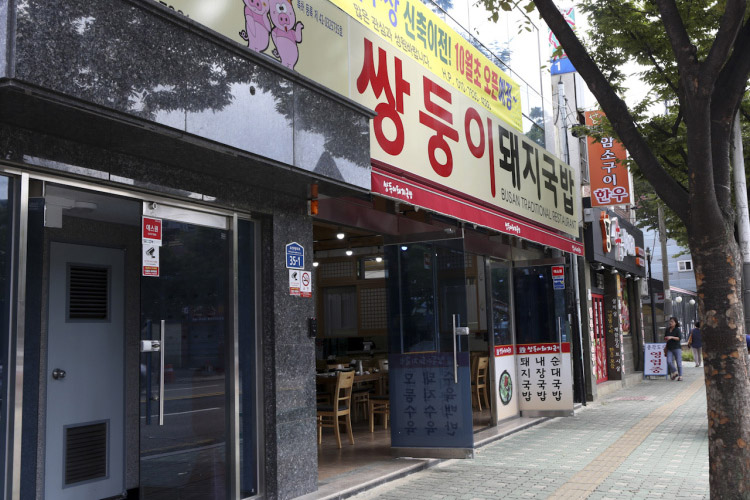
Licensed official/source photo. Photo: © Korea Tourism Organization · TourAPI content 2759609 · image 2759670_2 · Korea Open Government License Type 3 · original bytes · no modification SOURCE-CHECKED LISTING
Busan · Nam-gu
쌍둥이돼지국밥 본점 35-1 UN pyeonghwa-ro, Nam-gu, Busan Start with Dwaeji-gukbap · Steamed pork set
Visit Busan calls it one of the city's most popular dwaeji-gukbap restaurants and notes the regular mealtime line.
Be the first to review
The official city page currently says 09:00–22:00 and closed on public holidays. Queue and prices should be checked again on arrival.
Source checked 2026-08-23. Hours are not live; verify before travel. Save this place
Seoul · SOURCE-CHECKED LISTING 밍글스 Photo pending verification SOURCE-CHECKED LISTING
Seoul · Gangnam-gu
밍글스 2F, 19 Dosan-daero 67-gil, Gangnam-gu, Seoul 06016 Start with Korean
Chef Kang Mingoo connects Korean culinary philosophy, seasonal ingredients and fermented jang with a modern tasting-menu format.
Be the first to review
Book well ahead; reconfirm the current menu, dietary accommodation, cancellation terms and final price.
Source checked 2026-08-23. Hours are not live; verify before travel. Save this place
Jeju · SOURCE-CHECKED LISTING 돈사돈 본점 Photo pending verification SOURCE-CHECKED LISTING
Jeju · Jeju-si
돈사돈 본점 3086-3 Nohyeong-dong, Jeju-si, Jeju-do Korean BBQ Pork Local classic Start with Jeju black pork geun-gogi · Kimchi stew
Visit Jeju features this 2006 briquette-grill restaurant as a must-visit address for Jeju black pork and geun-gogi.
Be the first to review
The official page currently says 12:00–22:00, closed Tuesday. Portions are sold by weight, so confirm the current minimum order and reservation policy.
Source checked 2026-08-23. Hours are not live; verify before travel. Save this place
Busan · SOURCE-CHECKED LISTING 모리 Photo pending verification SOURCE-CHECKED LISTING
Busan · Haeundae-gu
모리 #2-4, 2F, 24 Haeundaehaebyeon-ro 298 beon-gil, Haeundae-gu, Busan 48099 Start with Japanese
Chef Kim Wan-gyu builds Japanese kaiseki-style courses around fresh Busan seafood and seasonal produce.
Be the first to review
The current address differs from older cached listings; match the Korean name, phone and exact building before departure.
Source checked 2026-08-23. Hours are not live; verify before travel. Save this place
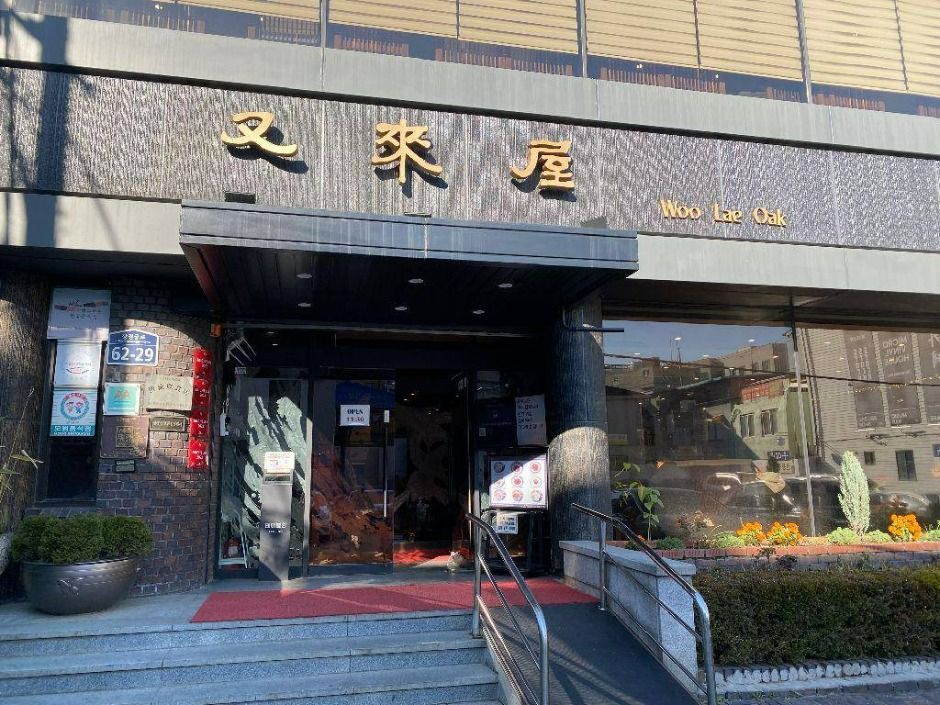
Licensed official/source photo. Photo: © Korea Tourism Organization · TourAPI content 133339 · image 3589221_1 · Korea Open Government License Type 3 · original bytes · no modification SOURCE-CHECKED LISTING
Seoul · Jung-gu
우래옥 62-29 Changgyeonggung-ro, Jung-gu, Seoul Noodles Korean BBQ Local classic Start with Pyeongyang naengmyeon · Bulgogi
VISITKOREA features this 1949 restaurant for Pyeongyang naengmyeon and bulgogi and notes that diners often line up.
Be the first to review
The official listing currently says 11:30–21:30, closed Monday, with cards accepted. Check current queue and holiday notices.
Source checked 2026-08-23. Hours are not live; verify before travel. Save this place
Seoul · SOURCE-CHECKED LISTING 정식당 Photo pending verification SOURCE-CHECKED LISTING
Seoul · Gangnam-gu
정식당 11 Seolleung-ro 158-gil, Gangnam-gu, Seoul 06014 Start with Contemporary Korean
A contemporary Korean tasting experience known for expressing familiar Korean ideas through fine-dining technique and presentation.
Be the first to review
Check the current lunch and dinner menus, beverage pairing, accessibility and cancellation deadline.
Source checked 2026-08-23. Hours are not live; verify before travel. Save this place
Jeju · SOURCE-CHECKED LISTING 우진해장국 Photo pending verification SOURCE-CHECKED LISTING
Jeju · Jeju-si
우진해장국 11 Seosa-ro, Jeju-si, Jeju-do Start with Gosari haejangguk · Momguk · Bindaetteok
VISITKOREA and Visit Jeju both feature this frequently queued restaurant for Jeju-style bracken-and-pork hangover soup.
Be the first to review
The official listings currently say 06:00–22:00 and warn of waiting tickets at busy times. Reconfirm holiday and annex hours.
Source checked 2026-08-23. Hours are not live; verify before travel. Save this place
Busan · SOURCE-CHECKED LISTING 피오또 Photo pending verification SOURCE-CHECKED LISTING
Busan · Haeundae-gu
피오또 2F, 219 Dalmaji-gil 117 beonga-gil, Haeundae-gu, Busan 48105 Start with Italian Contemporary
A small Dalmaji Hill restaurant using house-made pasta and produce sourced largely from the chef couple's family farm.
Be the first to review
Reservations are essential; reconfirm the one-group service rhythm, ingredient substitutions, access and cancellation terms.
Source checked 2026-08-23. Hours are not live; verify before travel. Save this place
Show 12 more · 14 remaining FOOD · WHERE TO START
What are you looking for? 🛡️ Korean Restaurant Dietary & Allergy Card
Seoul market bindaetteok Photo: Korea.net / Korean Culture and Information Service · CC BY-SA 2.0 · resized Markets, quick solo meals and late neighborhoods Choose a neighborhood first; crossing Seoul for every meal wastes the day.
Busan dwaeji-gukbap Photo: wjlee4284 · CC BY 2.0 KR · resized Port markets, pork soup and wheat noodles Group Nampo and Jagalchi separately from the eastern beach districts.
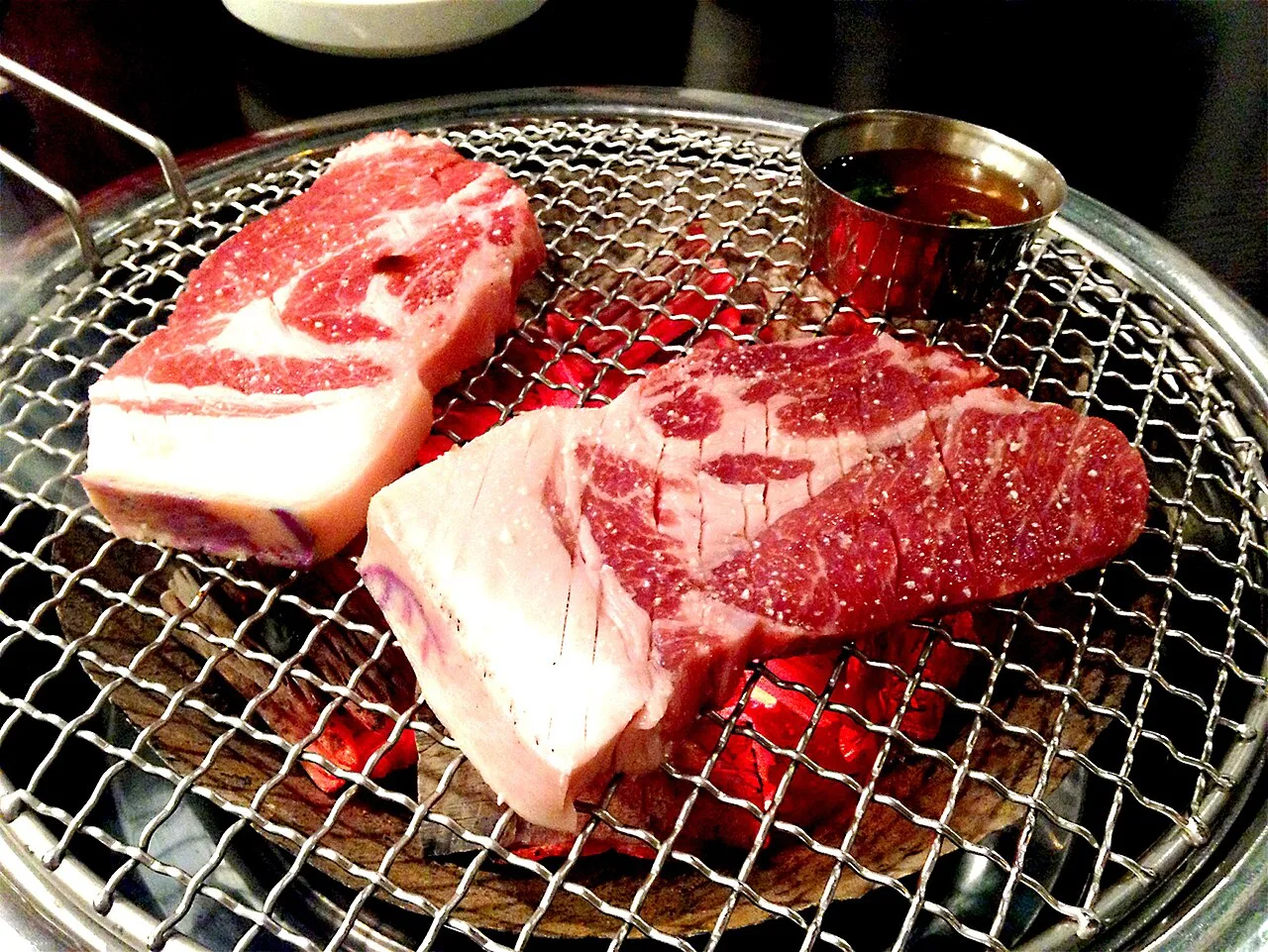
Jeju black-pork barbecue Photo: eommina · CC0 · resized Island seafood, black pork and market nights Jeju has no subway; search near the side of the island already in your route.
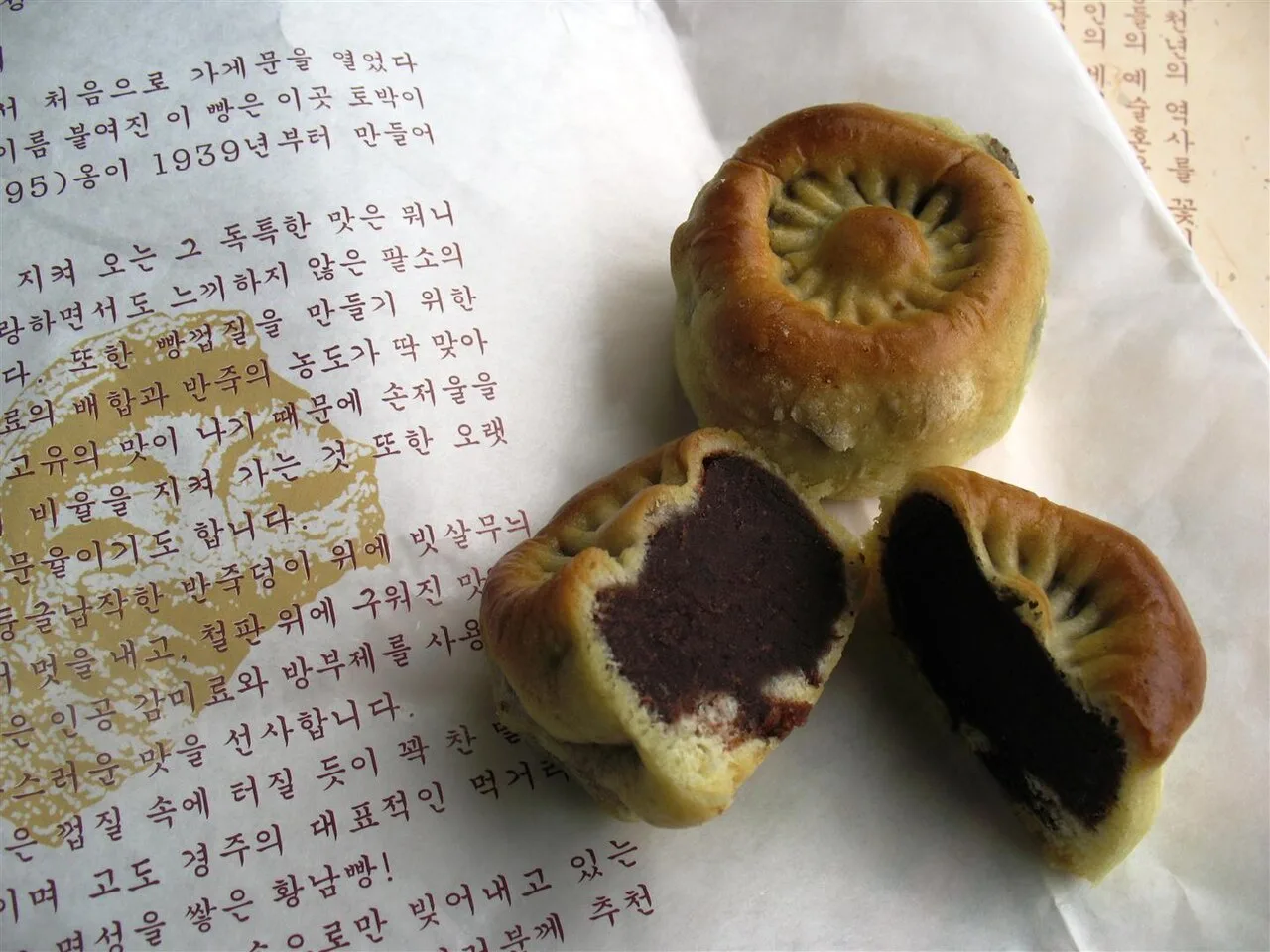
Gyeongju Hwangnam bread Photo: ProjectManhattan · CC0 · resized Historic-core meals and local bread stops Keep lunch inside the historic core unless an outer-loop restaurant is part of the route.
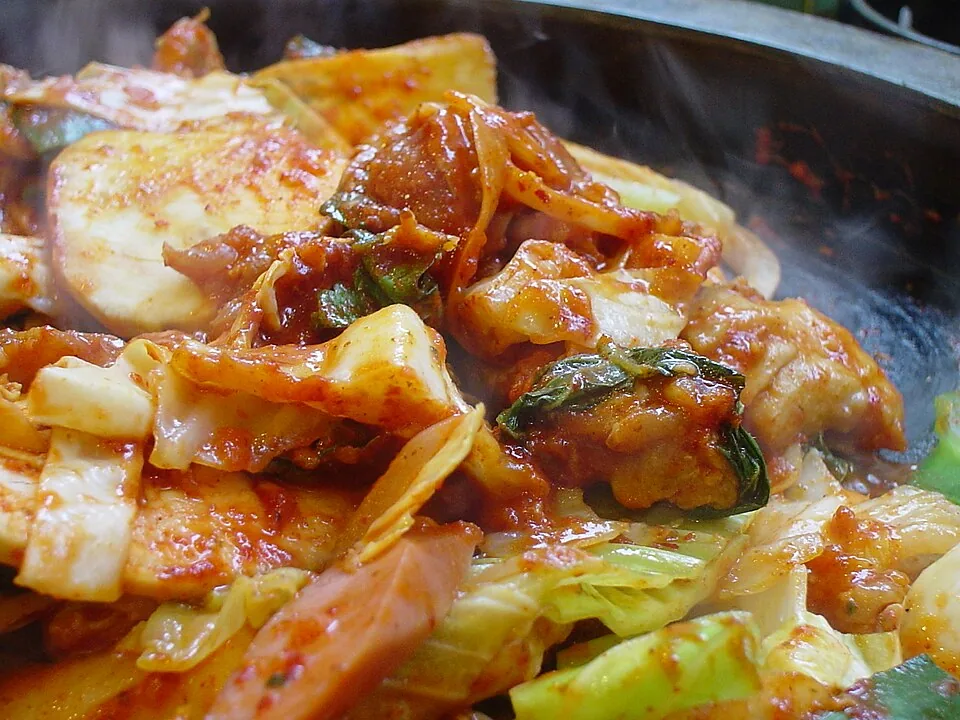
Chuncheon dakgalbi Photo: shizu k · CC BY-SA 2.0 · resized Different food corridors for mountains and coast Chuncheon, Gangneung and Sokcho are separate bases, not one meal district.
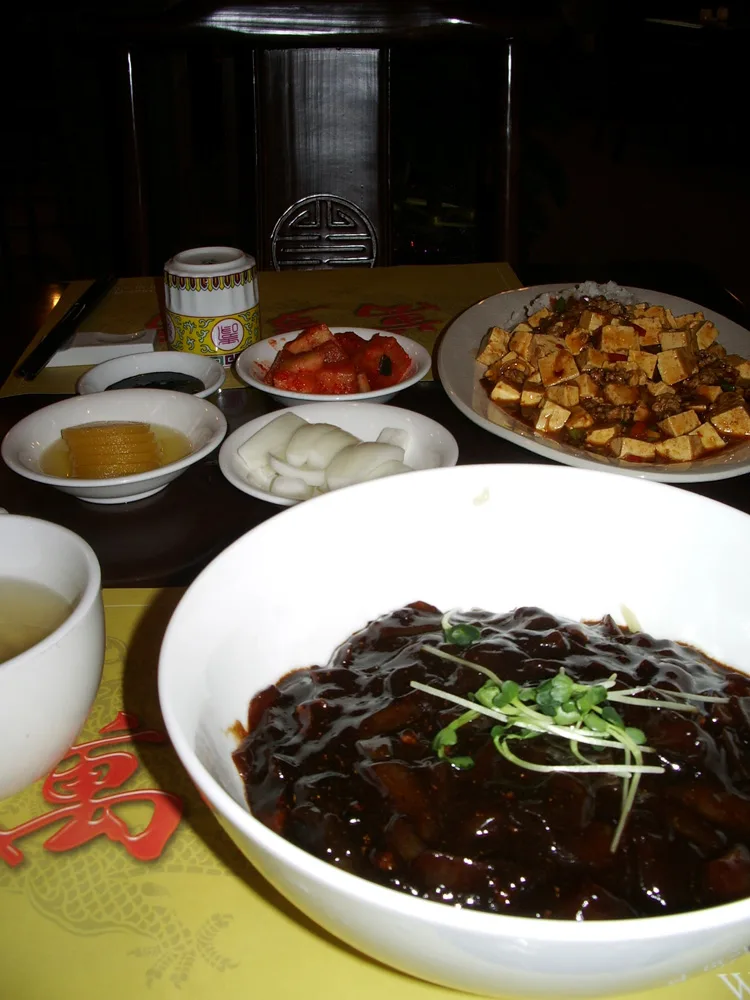
Incheon Chinatown jjajangmyeon Photo: Scarlet Sappho · CC BY-SA 2.0 · resized Incheon · Gyeonggi
인천 · 경기 Pick an airport, port or southern-city corridor A short map distance can still cross the whole capital region; search around the day’s destination.
Daejeon kalguksu search starter Photo: Happy Green Frog · CC BY 4.0 · resized Use the transport hub, then search locally Daejeon, Gongju, Buyeo and the west coast need different onward routes.
Kalguksu 칼국수 Daejeon
Walnut pastry 호두과자 Cheonan
Market food 시장 먹거리 Gongju
Jeonju bibimbap search starter Photo: Sous Chef · CC BY 2.0 · resized Build the meal around Jeonju, Gwangju or the south coast The southwest is too broad for one food crawl; keep each meal in its travel corridor.
Andong jjimdak Photo: Korean Culture and Information Service · KOGL Type 1 · resized Choose an inland city or a south-coast food route Andong, Daegu and Tongyeong are separate food bases with long transfers between them.
How to read this board Stars refer to the listed edition history. Price bands, addresses, hours and booking terms can change; recheck the restaurant and MICHELIN page before paying.
A card stays photo-free until an exact restaurant photograph and commercial reuse rights are both verified. Food photographed elsewhere is never substituted.
Edition All 2022 2023 2024 2025 2026 City All Seoul Busan Current Stars All 3 ★ 2 ★ 1 ★ 16 shown View MICHELIN restaurants on map
PHOTO PENDING VERIFICATION 밍글스
Seoul · Gangnam-gu ★★★
Mingles 밍글스 Chef Kang Mingoo connects Korean culinary philosophy, seasonal ingredients and fermented jang with a modern tasting-menu format.
Cuisine Korean · ₩₩₩₩
Edition history Two Stars in 2022-2024 · promoted to Three Stars in 2025
Good for A landmark modern Korean tasting menu
Address 2F, 19 Dosan-daero 67-gil, Gangnam-gu, Seoul 06016 2022 2023 2024 2025 2026
Before booking Book well ahead; reconfirm the current menu, dietary accommodation, cancellation terms and final price.
Google ↗ Naver ↗ Kakao ↗ MICHELIN ↗ Share
PHOTO PENDING VERIFICATION 알라 프리마
Seoul · Gangnam-gu ★★
alla prima 알라 프리마 An inventive fine-dining address whose courses combine precise technique with a changing selection of ingredients.
Cuisine Innovative · ₩₩₩₩
Edition history Two Stars throughout the five-edition window
Good for Chef's-table-style inventive dining
Address 13 Hakdong-ro 17-gil, Gangnam-gu, Seoul 06045 2022 2023 2024 2025 2026
Before booking Confirm the current tasting-menu schedule, allergy response and cancellation policy directly before paying.
Google ↗ Naver ↗ Kakao ↗ MICHELIN ↗ Share
PHOTO PENDING VERIFICATION 에빗
Seoul · Gangnam-gu ★★
Evett 에빗 Chef Joseph Lidgerwood explores Korean seasonal ingredients through an experimental tasting menu and unconventional combinations.
Cuisine Innovative · ₩₩₩₩
Edition history One Star in 2022-2024 · promoted to Two Stars in 2025
Good for Experimental courses using Korean ingredients
Address 10-5 Dosan-daero 45-gil, Gangnam-gu, Seoul 06021 2022 2023 2024 2025 2026
Before booking Confirm the current menu, dietary feasibility, pairing price, seating time and cancellation cutoff.
Google ↗ Naver ↗ Kakao ↗ MICHELIN ↗ Share
PHOTO PENDING VERIFICATION 정식당
Seoul · Gangnam-gu ★★
Jungsik 정식당 A contemporary Korean tasting experience known for expressing familiar Korean ideas through fine-dining technique and presentation.
Cuisine Contemporary Korean · ₩₩₩₩
Edition history Two Stars throughout the five-edition window
Good for Contemporary Korean fine dining
Address 11 Seolleung-ro 158-gil, Gangnam-gu, Seoul 06014 2022 2023 2024 2025 2026
Before booking Check the current lunch and dinner menus, beverage pairing, accessibility and cancellation deadline.
Google ↗ Naver ↗ Kakao ↗ MICHELIN ↗ Share
PHOTO PENDING VERIFICATION 권숙수
Seoul · Gangnam-gu ★★
Kwonsooksoo 권숙수 A refined Korean course restaurant centered on seasonal ingredients, detailed preparations and the structure of a traditional guest table.
Cuisine Korean · ₩₩₩₩
Edition history Two Stars throughout the five-edition window
Good for A formal Korean multi-course table
Address 4F, 37 Apgujeong-ro 80-gil, Gangnam-gu, Seoul 06016 2022 2023 2024 2025 2026
Before booking The Guide lists solo dining; still confirm seating, menu minimum, dietary needs and payment when reserving.
Google ↗ Naver ↗ Kakao ↗ MICHELIN ↗ Share
PHOTO PENDING VERIFICATION 라연
Seoul · Jung-gu ★★
La Yeon 라연 The Shilla Seoul's high-floor Korean restaurant presents a polished contemporary reading of Korean cuisine with a broad city view.
Cuisine Korean Contemporary · ₩₩₩₩
Edition history Two Stars throughout the five-edition window
Good for Korean fine dining with a city view
Address 23F, The Shilla Seoul, 249 Dongho-ro, Jung-gu, Seoul 04605 2022 2023 2024 2025 2026
Before booking Confirm hotel access, dress expectations, dietary accommodation, window-seat requests and the final menu price.
Google ↗ Naver ↗ Kakao ↗ MICHELIN ↗ Share
PHOTO PENDING VERIFICATION 미토우
Seoul · Gangnam-gu ★★ GREEN STAR
Mitou 미토우 Chefs Kwon Young-woon and Kim Bo-mi build traditional Japanese courses around carefully sourced seasonal ingredients.
Cuisine Japanese · ₩₩₩₩
Edition history One Star in 2022-2023 · promoted to Two Stars in 2024
Good for Season-led Japanese chef's table
Address 24 Dosan-daero 70-gil, Gangnam-gu, Seoul 06064 2022 2023 2024 2025 2026
Before booking Ask about counter seating, raw seafood, allergy limits, pairing options and the current cancellation terms.
Google ↗ Naver ↗ Kakao ↗ MICHELIN ↗ Share
PHOTO PENDING VERIFICATION 세븐스도어
Seoul · Gangnam-gu ★
7th Door 세븐스도어 A tasting-menu restaurant that uses fermentation and aging as a framework for contemporary Korean flavors.
Cuisine Korean Contemporary · ₩₩₩₩
Edition history One Star throughout the five-edition window
Good for A contemporary Korean chef's table
Address 4F, 41 Hakdong-ro 97-gil, Gangnam-gu, Seoul 06072 2022 2023 2024 2025 2026
Before booking Confirm the fixed seating time, menu length, fermentation-related allergens and cancellation terms.
Google ↗ Naver ↗ Kakao ↗ MICHELIN ↗ Share
PHOTO PENDING VERIFICATION 피오또
Busan · Haeundae-gu ★ GREEN STAR
Fiotto 피오또 A small Dalmaji Hill restaurant using house-made pasta and produce sourced largely from the chef couple's family farm.
Cuisine Italian Contemporary · ₩₩₩
Edition history One Star since Busan's first edition in 2024
Good for Farm-to-table, pasta-led tasting
Address 2F, 219 Dalmaji-gil 117 beonga-gil, Haeundae-gu, Busan 48105 2022 2023 2024 2025 2026
Before booking Reservations are essential; reconfirm the one-group service rhythm, ingredient substitutions, access and cancellation terms.
Google ↗ Naver ↗ Kakao ↗ MICHELIN ↗ Share
PHOTO PENDING VERIFICATION 고료리 켄
Seoul · Gangnam-gu ★
Goryori Ken 고료리 켄 Chef Kim Geon presents highly seasonal produce in a small counter setting informed by contemporary Japanese technique.
Cuisine Japanese Contemporary · ₩₩₩₩
Edition history One Star throughout the five-edition window
Good for An intimate seasonal counter
Address 2F, 15-3 Eonju-ro 152-gil, Gangnam-gu, Seoul 06021 2022 2023 2024 2025 2026
Before booking The main counter is small; confirm solo seating, raw ingredients, sake pairing and cancellation rules.
Google ↗ Naver ↗ Kakao ↗ MICHELIN ↗ Share
PHOTO PENDING VERIFICATION 모리
Busan · Haeundae-gu ★
Mori 모리 Chef Kim Wan-gyu builds Japanese kaiseki-style courses around fresh Busan seafood and seasonal produce.
Cuisine Japanese · ₩₩₩
Edition history One Star since Busan's first edition in 2024
Good for Busan seafood through a kaiseki lens
Address #2-4, 2F, 24 Haeundaehaebyeon-ro 298 beon-gil, Haeundae-gu, Busan 48099 2022 2023 2024 2025 2026
Before booking The current address differs from older cached listings; match the Korean name, phone and exact building before departure.
Google ↗ Naver ↗ Kakao ↗ MICHELIN ↗ Share
PHOTO PENDING VERIFICATION 온지음
Seoul · Jongno-gu ★
Onjium 온지음 Across from Gyeongbokgung's wall, Onjium reinterprets historically researched Korean and court-cuisine ideas with modern technique.
Cuisine Korean · ₩₩₩₩
Edition history One Star throughout the five-edition window
Good for Food-history research beside Gyeongbokgung
Address 4F, 49 Hyoja-ro, Jongno-gu, Seoul 03043 2022 2023 2024 2025 2026
Before booking The current Guide lists direct booking and cash only; reconfirm both payment and reservation terms before the visit.
Google ↗ Naver ↗ Kakao ↗ MICHELIN ↗ Share
PHOTO PENDING VERIFICATION 팔레트
Busan · Haeundae-gu ★
Palate 팔레트 Chef Kim Jae-hoon's contemporary cooking draws on varied culinary experience and an experimental approach in Busan.
Cuisine Contemporary · ₩₩
Edition history One Star since Busan's first edition in 2024
Good for Free-form contemporary dining and a coastal view
Address 3F, 154 Dalmaji-gil 65 beon-gil, Haeundae-gu, Busan 48576 2022 2023 2024 2025 2026
Before booking Confirm the exact current price, hours, view-seat request, dietary handling and cancellation deadline.
Google ↗ Naver ↗ Kakao ↗ MICHELIN ↗ Share
PHOTO PENDING VERIFICATION 소설한남
Seoul · Yongsan-gu ★
Soseoul Hannam 소설한남 The kitchen draws on familiar local ingredients and traditional Korean preparations while expressing a contemporary Seoul sensibility.
Cuisine Korean · ₩₩₩₩
Edition history One Star throughout the five-edition window
Good for Modern Seoul cuisine and Korean drinks
Address B1F, 21-18 Hannam-daero 20-gil, Yongsan-gu, Seoul 04419 2022 2023 2024 2025 2026
Before booking The venue is below ground; confirm step-free access, current pairings, allergies and reservation terms.
Google ↗ Naver ↗ Kakao ↗ MICHELIN ↗ Share
PHOTO PENDING VERIFICATION 스시 마츠모토
Seoul · Gangnam-gu ★
Sushi Matsumoto 스시 마츠모토 Chef Matsumoto Mizuho focuses on the balance and cadence of tsumami and nigiri in a traditional sushi-counter format.
Cuisine Sushi · ₩₩₩₩
Edition history Joined the Star selection in 2022 · One Star through 2026
Good for Traditional sushi and solo counter dining
Address 24 Dosan-daero 75-gil, Gangnam-gu, Seoul 06015 2022 2023 2024 2025 2026
Before booking Confirm raw-seafood restrictions, solo counter seating, sake pairing and the reservation cancellation deadline.
Google ↗ Naver ↗ Kakao ↗ MICHELIN ↗ Share
PHOTO PENDING VERIFICATION 윤서울
Seoul · Gangnam-gu ★
YUN 윤서울 Chef-owner Kim Do-yun uses aging, fermentation and drying to build depth across an ingredient-led Korean set menu.
Cuisine Korean · ₩₩₩
Edition history Joined the Star selection in 2022 · One Star through 2026
Good for Ingredient-focused Korean courses
Address 805 Seolleung-ro, Gangnam-gu, Seoul 06019 2022 2023 2024 2025 2026
Before booking Confirm the current set menu, counter availability, dietary limits and cancellation policy directly.
Google ↗ Naver ↗ Kakao ↗ MICHELIN ↗ Share
View opening and wait reports on map
No approved restaurant has published a live update yet. The regional search board above remains usable. Real owner listings and traveler reports will appear here only after publication and moderation.
FOUR MARKETS · FOUR DIFFERENT MEALS
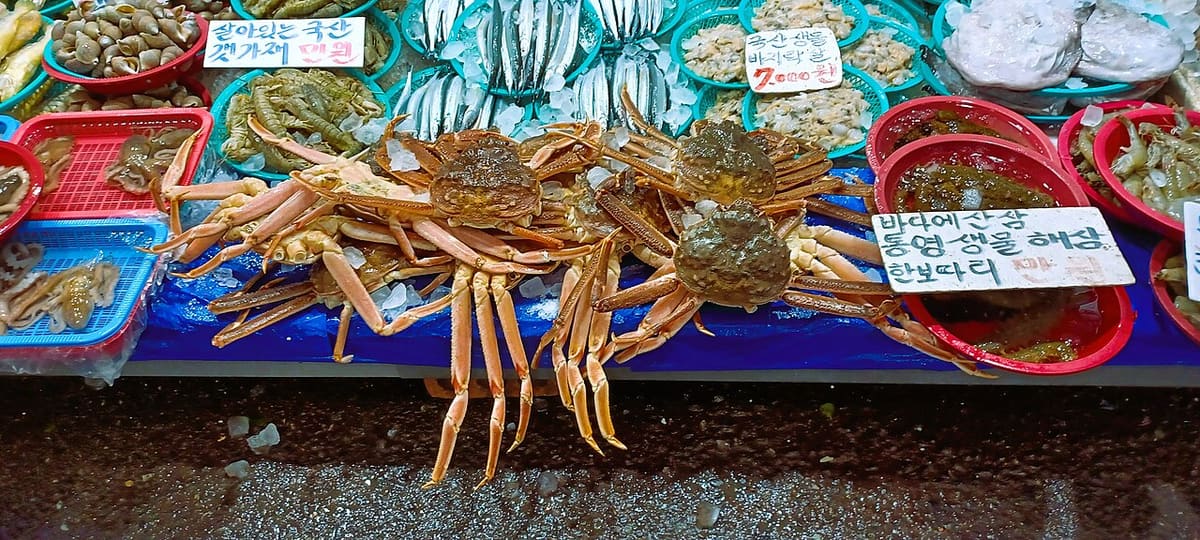
Do not treat every market as the same stop. Hours below come from Visit Seoul. Vendor menus, queues and payment methods remain vendor-by-vendor, so each detail page keeps the official source attached. Photo: Enamoradadecorea · CC0 1.0 · cropped 6 Line 6 · Exit 2
망원시장
Street food, market snacks and a picnic stop near Mangwon Hangang Park.
Useful hours 10:00 AM–9:00 PM
International card Bring a backup payment method
Solo Yes for snacks and takeaway Visit Seoul · edited May 4, 2026 Photo: ChongDae · CC BY-SA 3.0 · resized 1 Line 1 · Jongno 5-ga · Exit 8
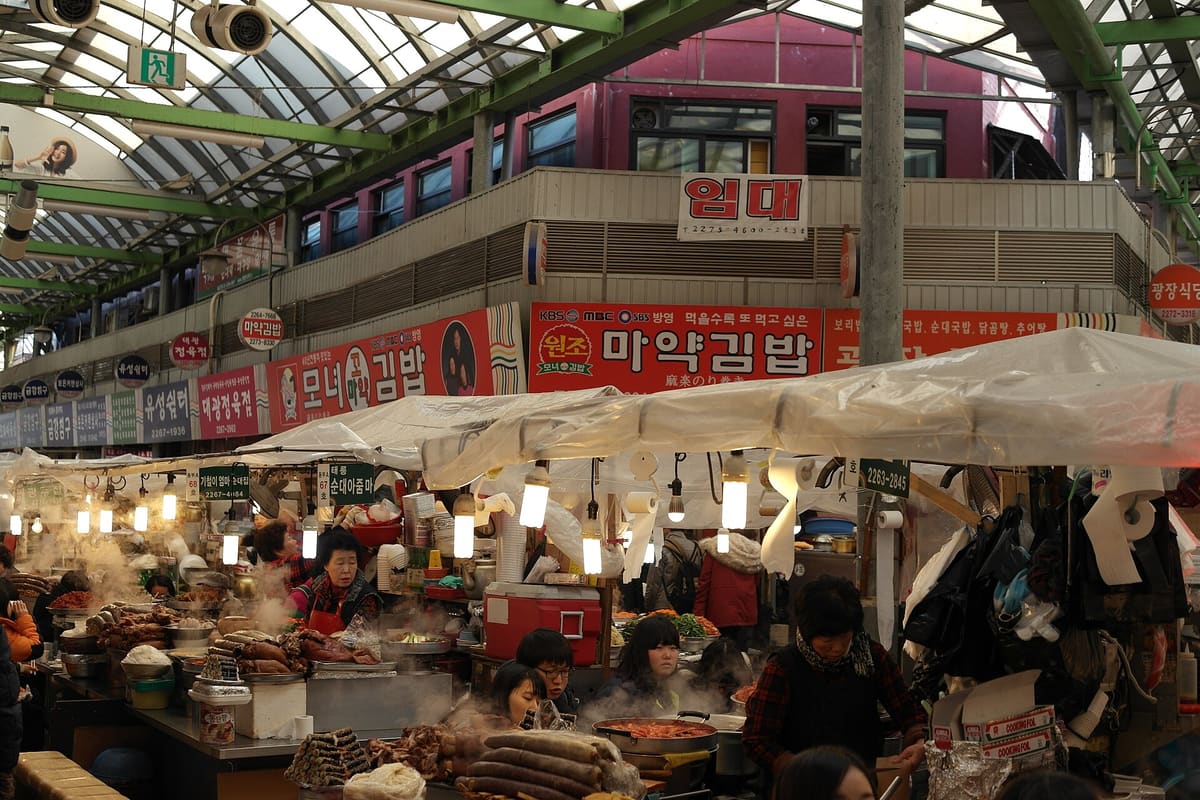
광장시장
A covered market known for bindaetteok and mayak gimbap, eaten standing at the stall.
Useful hours 9:00 AM–11:00 PM daily
International card Vendor by vendor
Solo Good for individual dishes Visit Seoul · edited May 4, 2026 Photo: Republic of Korea from Seoul, Republic of Korea · CC BY-SA 2.0 · resized 3 Line 3 · Gyeongbokgung · Exit 2
통인시장
A compact Seochon market where participating stalls fill a token-paid lunchbox.
Useful hours Wed–Mon 11:00 AM–3:00 PM
International card Ask each vendor
Solo Well suited to one person Visit Seoul · edited May 4, 2026 Photo: Smiley.toerist · CC BY-SA 4.0 · resized 4 Line 4 · Hoehyeon · Exit 7
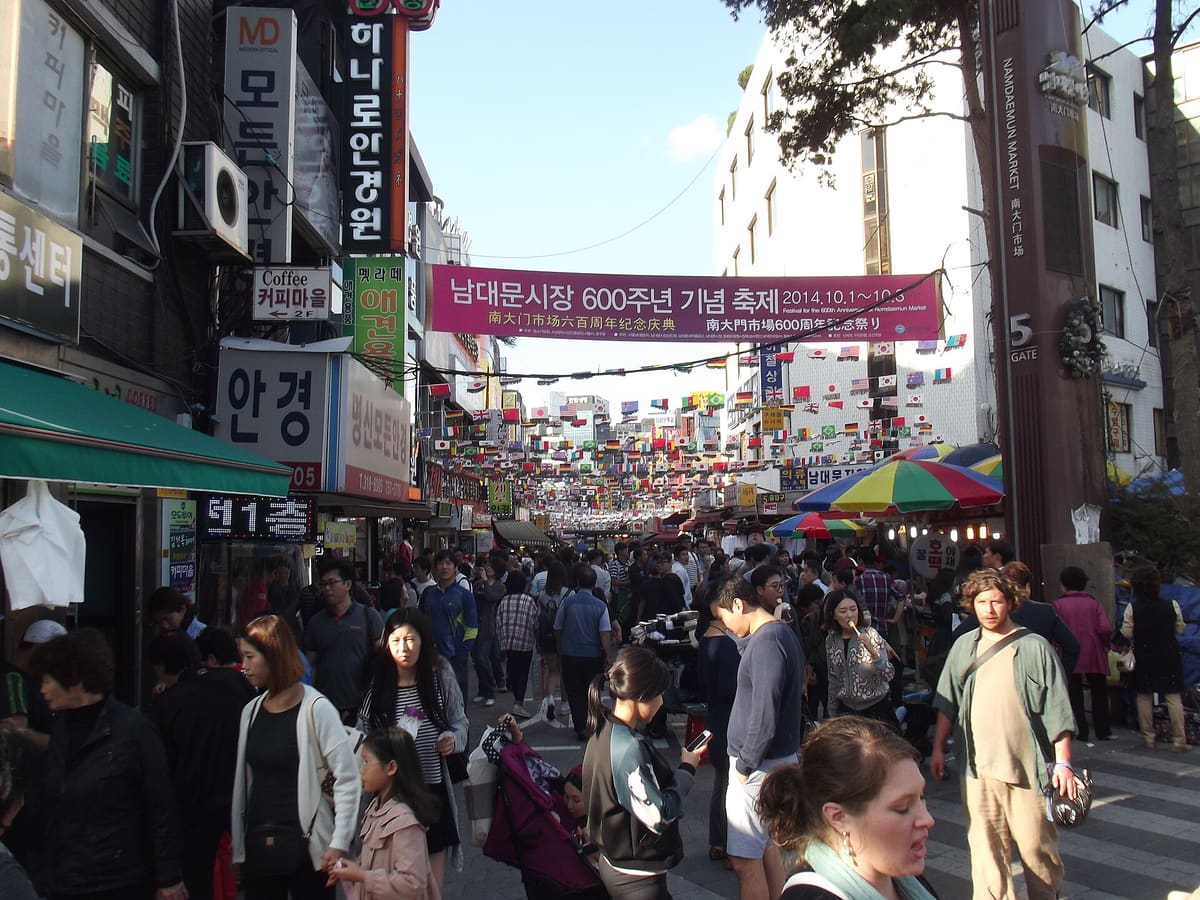
남대문시장
A vast market with cutlassfish, kalguksu and street-snack alleys near Sungnyemun.
Useful hours Vary by stall and section
International card Vendor by vendor
Solo Depends on the stall Visit Seoul · edited May 5, 2026 READ THE MENU BOARD
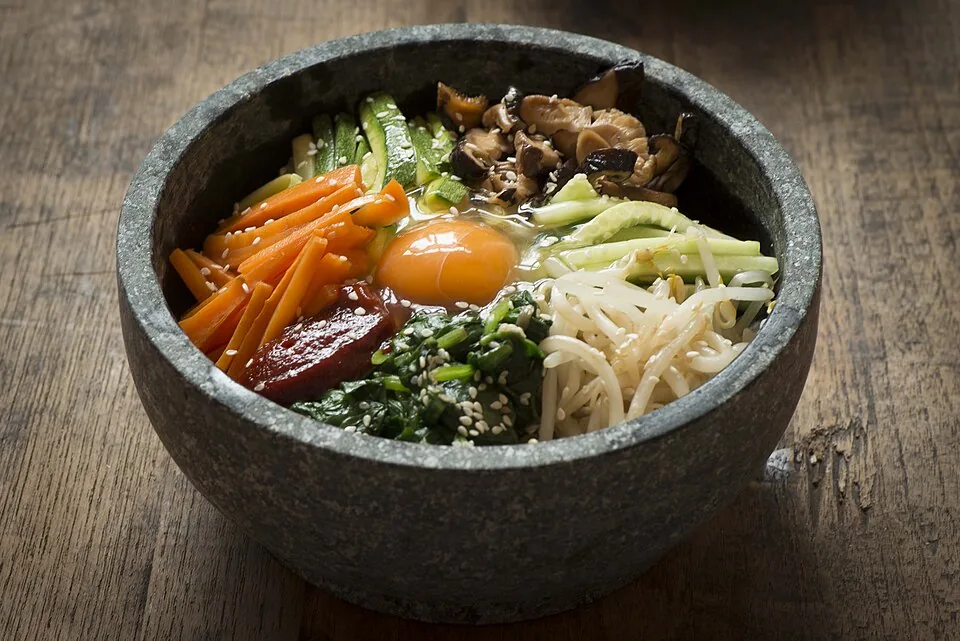
Eight categories, and the decision each one asks for. These are orientation notes, not ingredient guarantees. Recipes vary by kitchen; allergies, vegetarian requirements and halal needs must be confirmed every time. Photo: Sous Chef · CC BY 2.0 · resized 01 · Nationwide · strongly associated with Jeonju Bibimbap 비빔밥 A first Korean lunch Rice, vegetables and toppings are mixed at the table; add gochujang gradually so you control the heat.
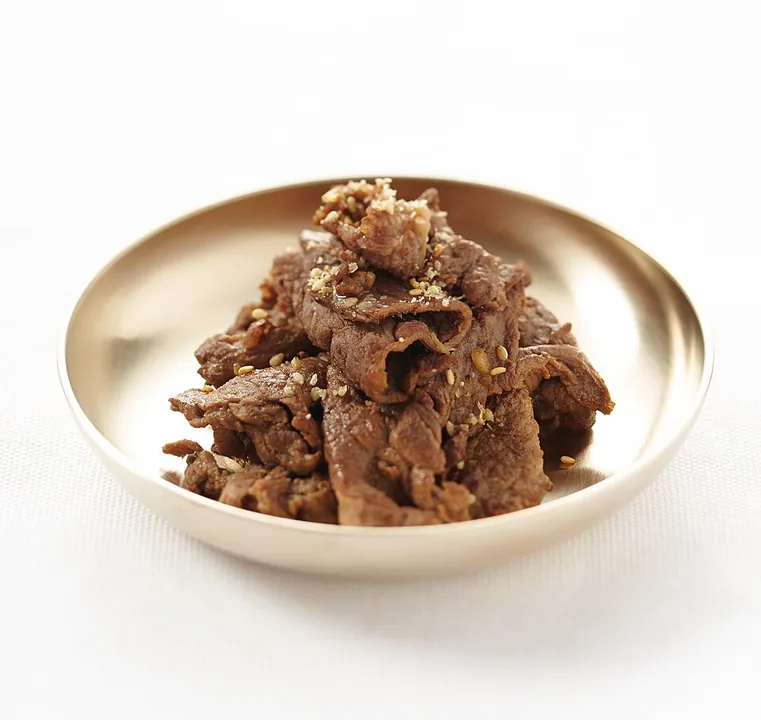
The topping can include beef and egg, while gochujang contains fermented ingredients. A vegetable-looking bowl is not automatically vegan. Photo: National Institute of Korean Language · CC BY-SA 2.0 KR · resized 02 · Nationwide Bulgogi 불고기 A mild shared meal Thin marinated meat is grilled or cooked in a pan; ask whether rice is included or ordered separately.
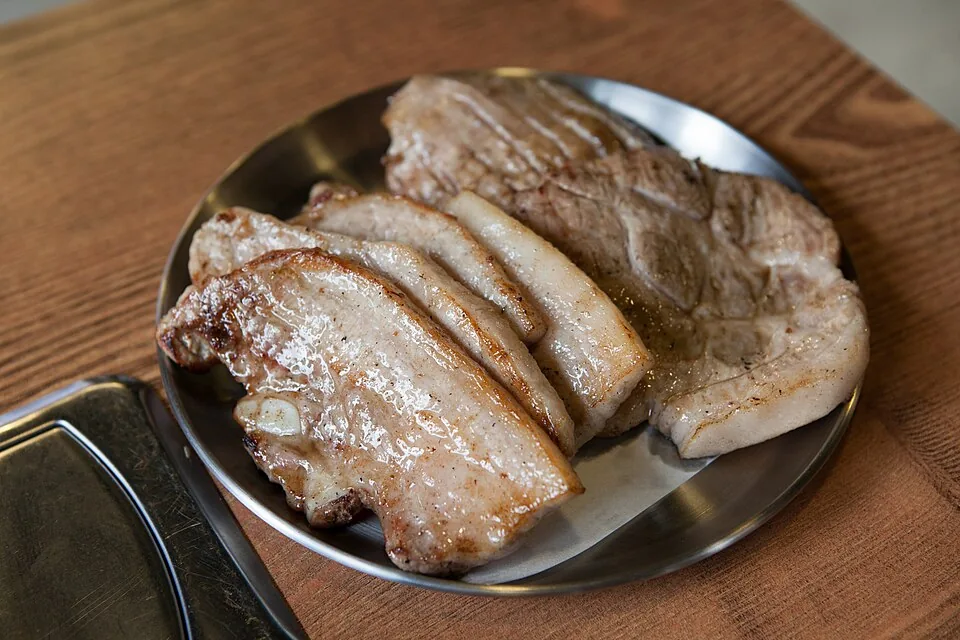
Usually beef, but pork versions exist. Marinades commonly contain soy, sesame and sugar. Photo: Jinsoo Jang · CC0 · resized 03 · Nationwide Samgyeopsal 삼겹살 A social dinner Order pork belly by portion, grill it at the table and wrap it with leaves, garlic and sauce.
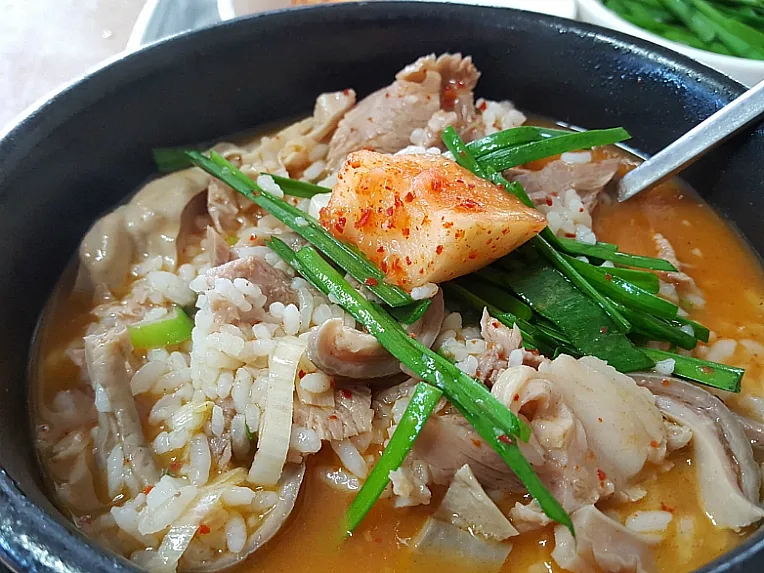
Many restaurants require two initial portions. It is pork, and shared grills create cross-contact for dietary restrictions. Photo: wjlee4284 · CC BY 2.0 KR · resized 04 · Busan · Gyeongsang Dwaeji-gukbap 돼지국밥 A fast solo breakfast or lunch Season the pork-and-rice soup little by little with chives, salted shrimp or seasoning from the table.
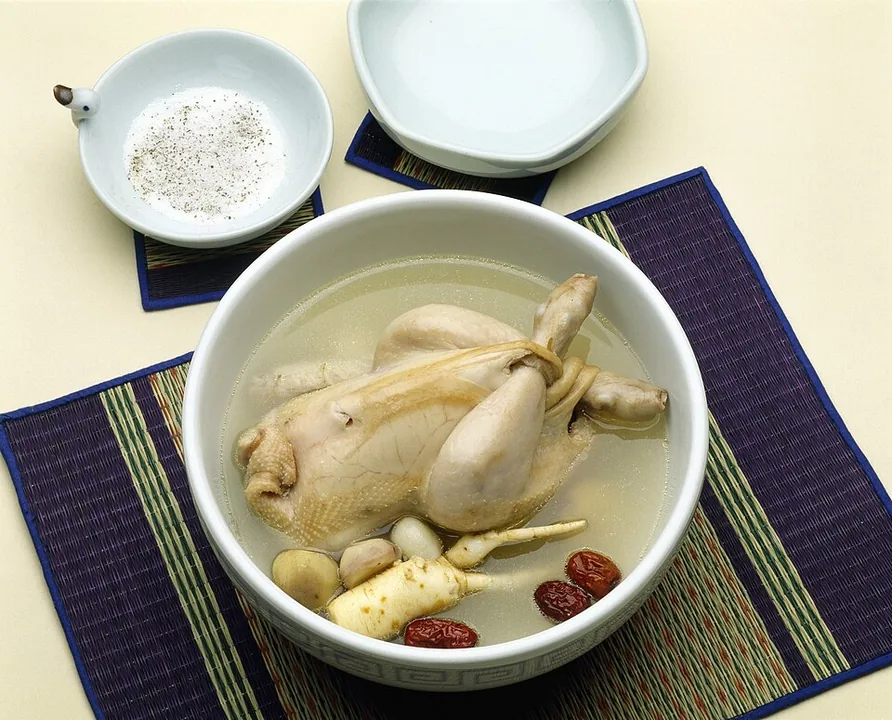
Contains pork; salted shrimp is a common condiment. Offal versions may be listed beside the standard bowl. Photo: wizdata · CC0 · resized 05 · Nationwide Samgyetang 삼계탕 A restorative hot meal A small whole chicken is filled with rice and served in broth; salt is normally adjusted at the table.
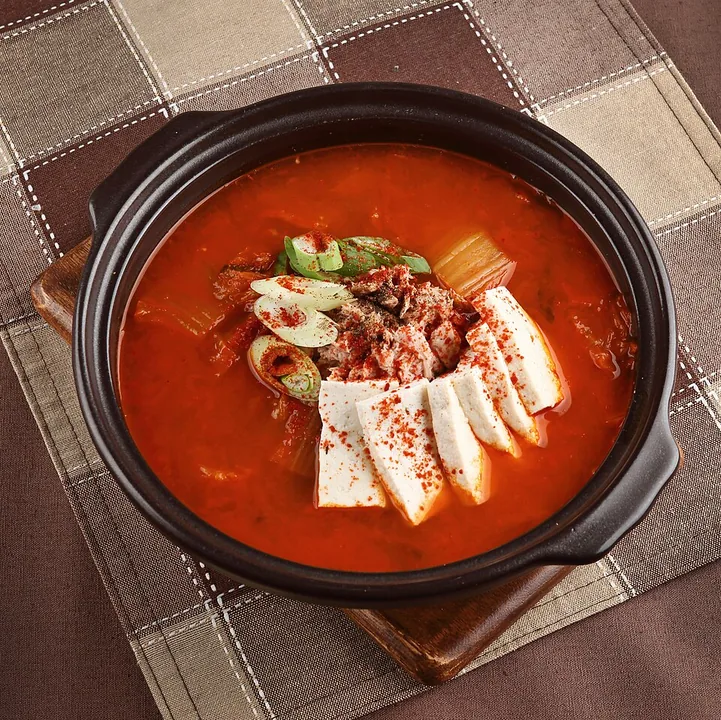
The chicken contains bones and the filling may include ginseng, jujube, garlic and chestnut. Photo: Korea Agro-Fisheries & Food Trade Corporation · KOGL Type 1 · resized 06 · Nationwide Kimchi-jjigae 김치찌개 Comfort food with rice Order the stew with rice and shared side dishes; it is often easiest at shops that welcome solo diners.
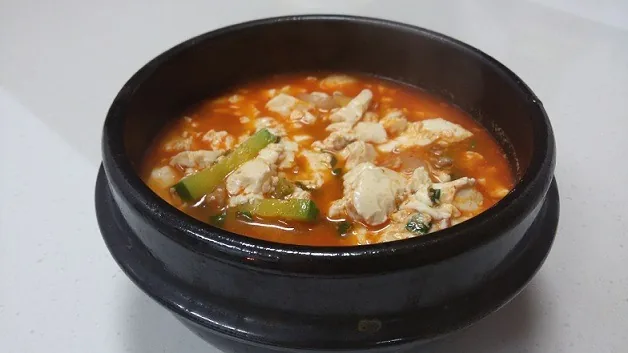
Frequently contains pork, tuna, anchovy stock or fish sauce even when the menu only says kimchi stew. Photo: Happy Green Frog · CC BY 4.0 · resized 07 · Nationwide · Chodang in Gangneung Sundubu-jjigae 순두부찌개 A bubbling solo meal Soft tofu stew arrives very hot; choose seafood, meat or plain only after checking the exact broth and topping.
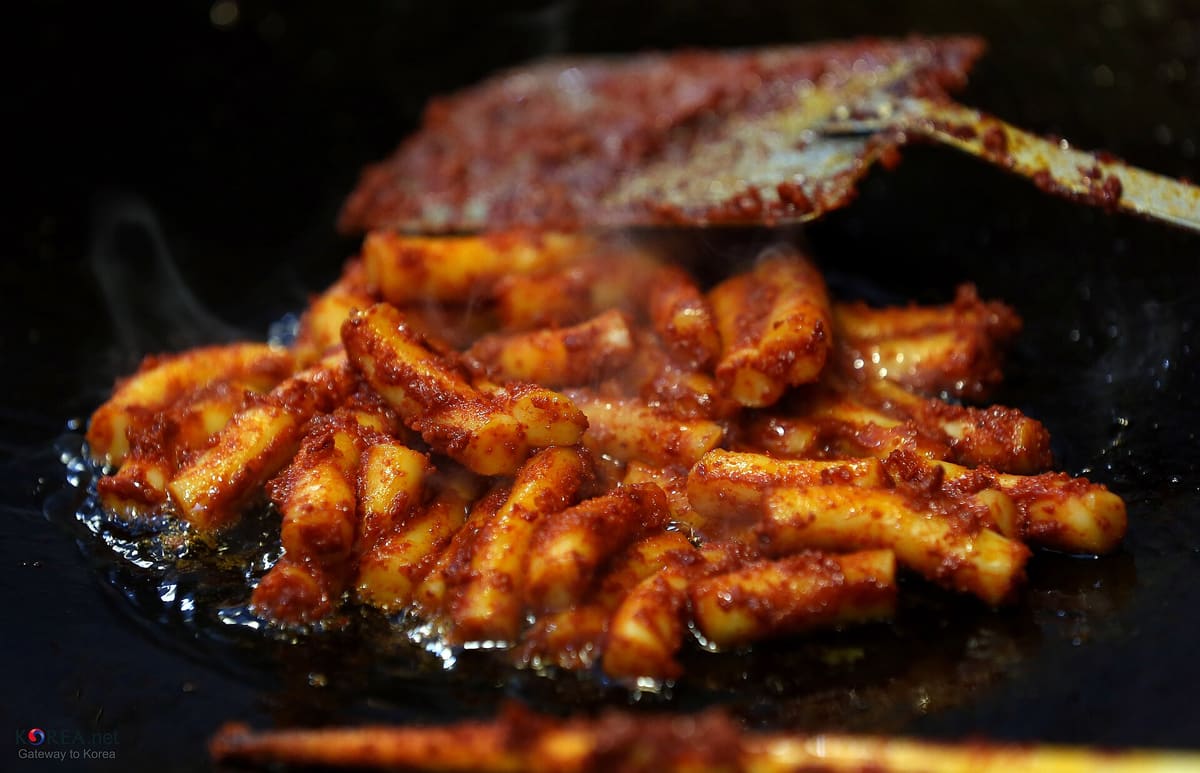
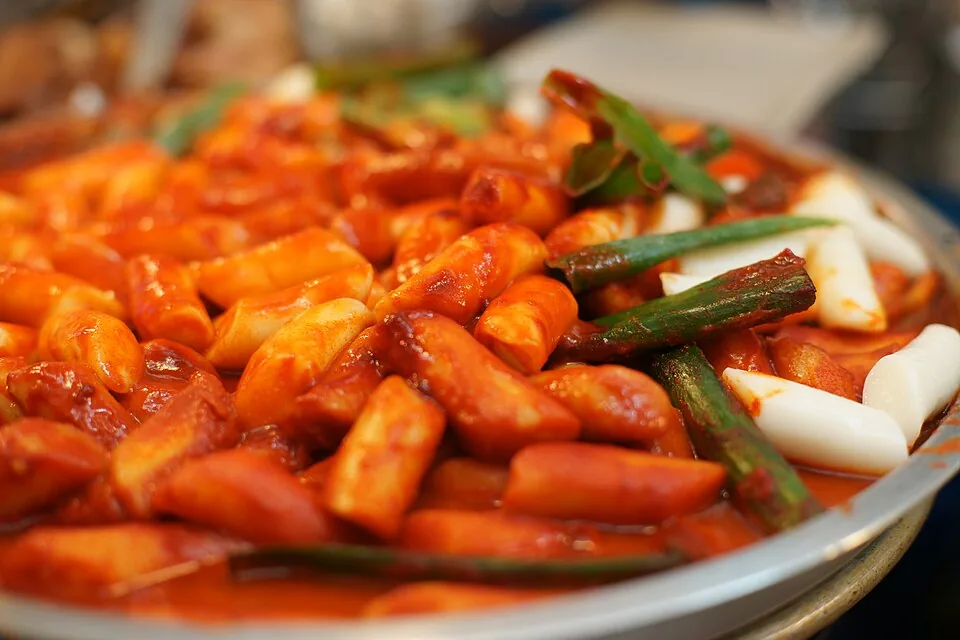
A tofu dish can still contain anchovy or meat stock, shellfish and a raw egg. Ask rather than assuming it is vegetarian. Photo: Popo le Chien · CC0 · resized 08 · Nationwide street food Tteokbokki 떡볶이 A market snack Rice cakes in sauce are often ordered with fish cake and fried snacks; one portion can be enough to share.
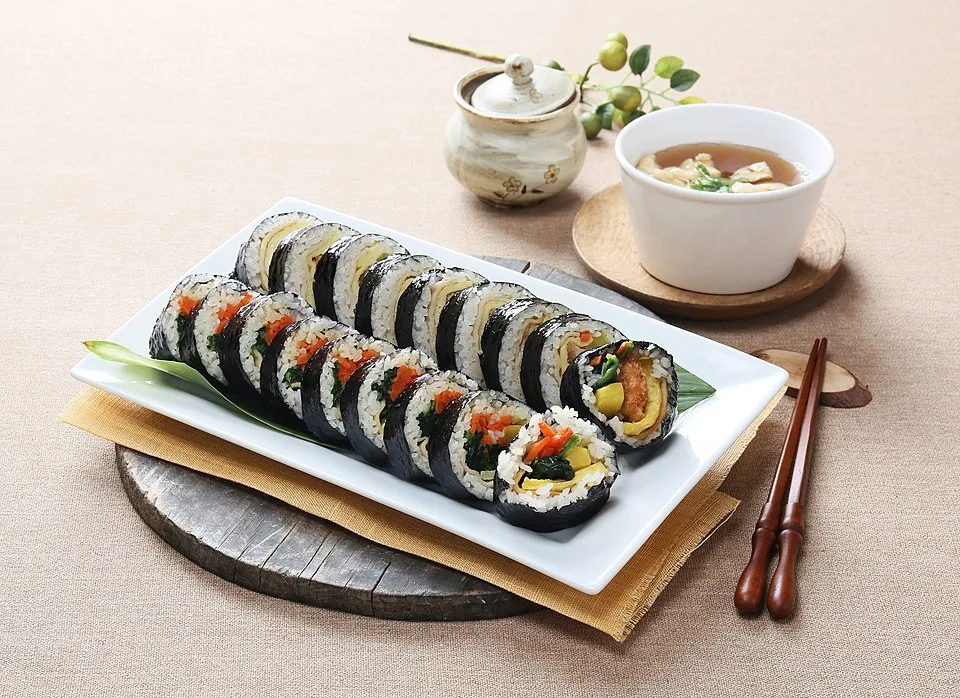
Red sauce can be very spicy. Fish cake and seafood stock are common, and wheat may appear in sauce or mixed rice cakes. Photo: changupn · CC0 · resized 09 · Nationwide Gimbap 김밥 A train ride or quick solo meal Rice and fillings are rolled in seaweed and sliced; pick a named filling rather than assuming every roll is the same.
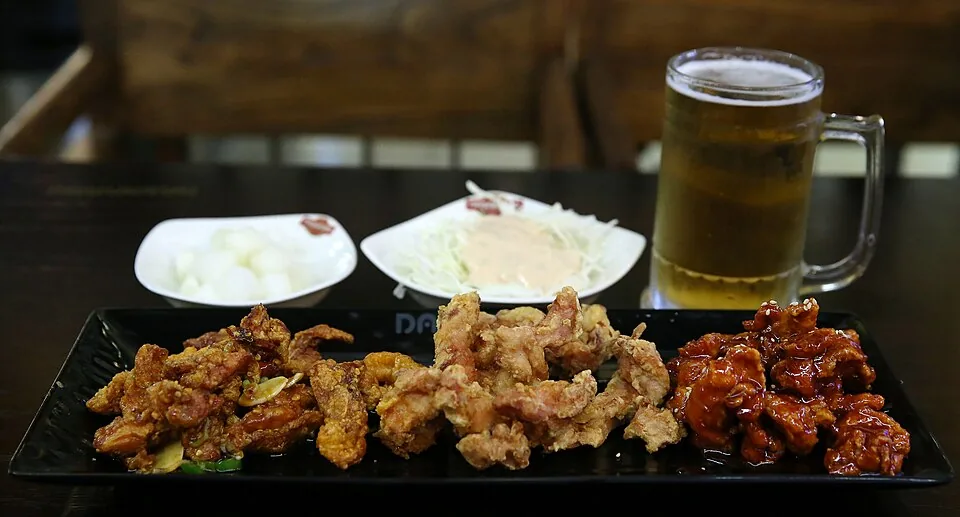
Standard rolls often include egg, ham, fish cake and pickled radish. Tuna versions usually contain mayonnaise. Photo: Korea.net / Korean Culture and Information Service · CC BY-SA 2.0 · resized 10 · Nationwide Korean fried chicken 치킨 A late shared meal A whole order can be large; ask for a half-and-half flavour or a smaller boneless serving when available.
Batter contains wheat and sauces may include soy, dairy or nuts. Boneless does not always mean breast meat. Photo: shizu k · CC BY-SA 2.0 · resized 11 · Chuncheon · Gangwon Dakgalbi 닭갈비 A spicy group meal Chicken, cabbage and rice cakes cook together on a hot plate; fried rice is an optional finish, not a second main.
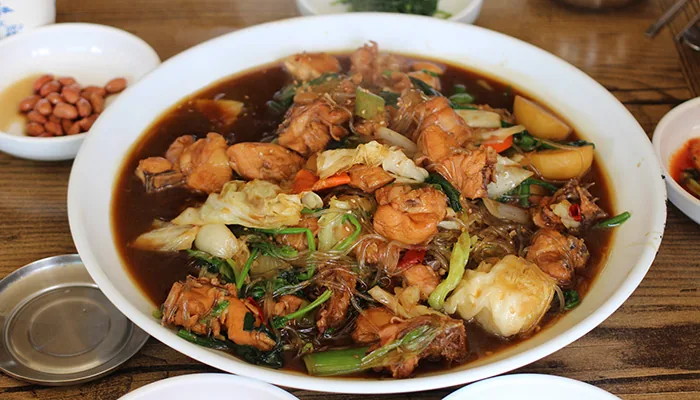
The sauce is usually spicy and may contain soy. Cheese and noodles are optional additions, and minimum portions are common. Photo: Korean Culture and Information Service · KOGL Type 1 · resized 12 · Andong · Gyeongsang Andong-jjimdak 안동찜닭 Sharing after a heritage day Braised chicken comes with glass noodles and vegetables; confirm the size because even a small order may feed several people.
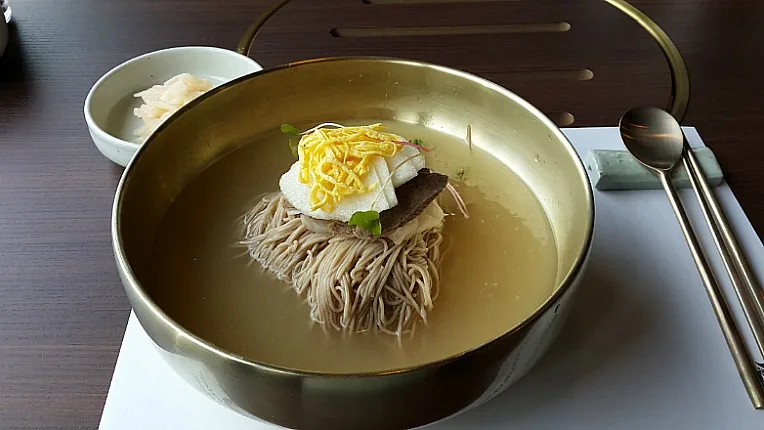
Soy-based sauce, bones and hidden heat are common. Glass noodles are slippery and the pot stays hot. Photo: wjlee4284 · CC BY 2.5 · resized 13 · Nationwide · northern Korean roots Naengmyeon 냉면 A cool summer lunch Choose mul for cold broth or bibim for spicy mixed noodles; vinegar and mustard are adjusted at the table.
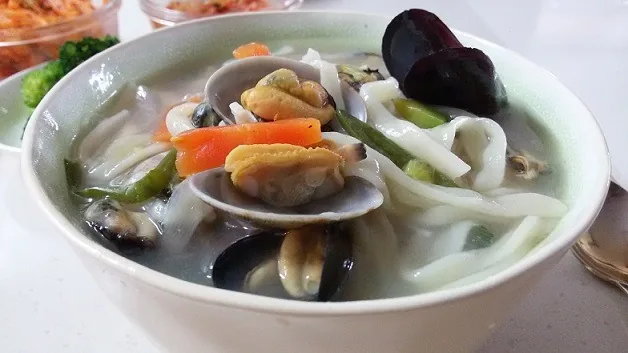
Broth is often beef-based and noodles may combine buckwheat and starch. Scissors are commonly offered for long noodles. Photo: Happy Green Frog · CC BY 4.0 · resized 14 · Nationwide · many local styles Kalguksu 칼국수 A warm, simple lunch Knife-cut wheat noodles vary by shop: anchovy, clam, chicken and perilla versions are different meals.
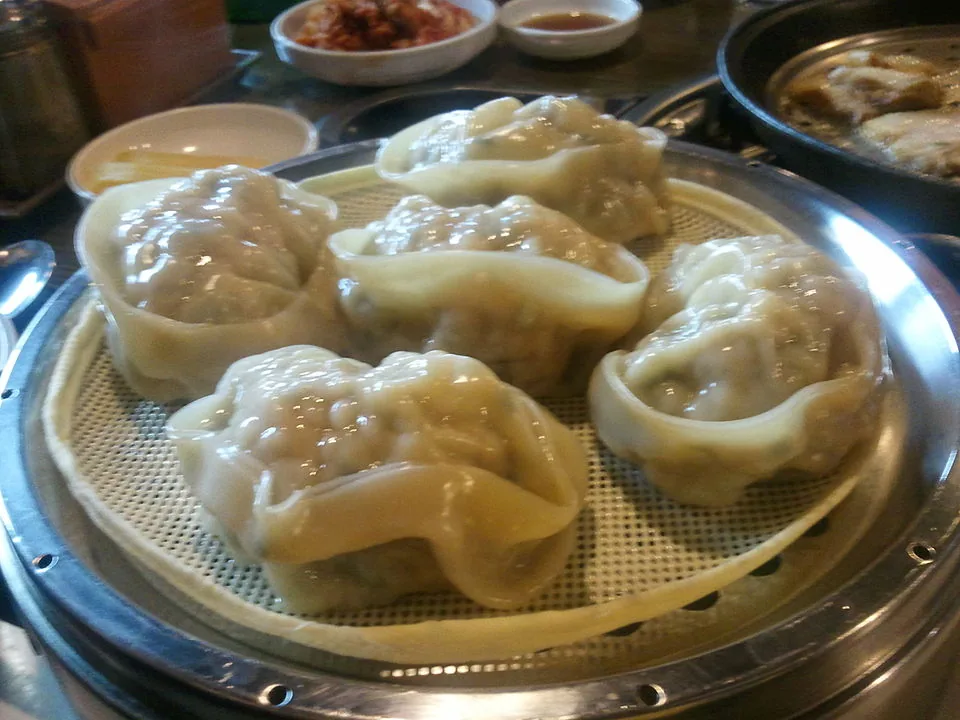
Contains wheat; broth may contain seafood or meat. Clam versions require shellfish caution. Photo: Raven9722 · CC0 · resized 15 · Nationwide Mandu 만두 A snack or side dish Choose steamed, boiled or fried dumplings and check the portion before adding them beside another main.
Fillings commonly include pork, tofu, egg, kimchi and glass noodles; the wrapper usually contains wheat. Photo: Tales of an LA Addict / Abby · CC BY-SA 2.0 · resized 16 · Nationwide · coastal seafood versions Pajeon 파전 A rainy-day shared plate The scallion pancake is cut for sharing; haemul-pajeon specifically adds seafood.
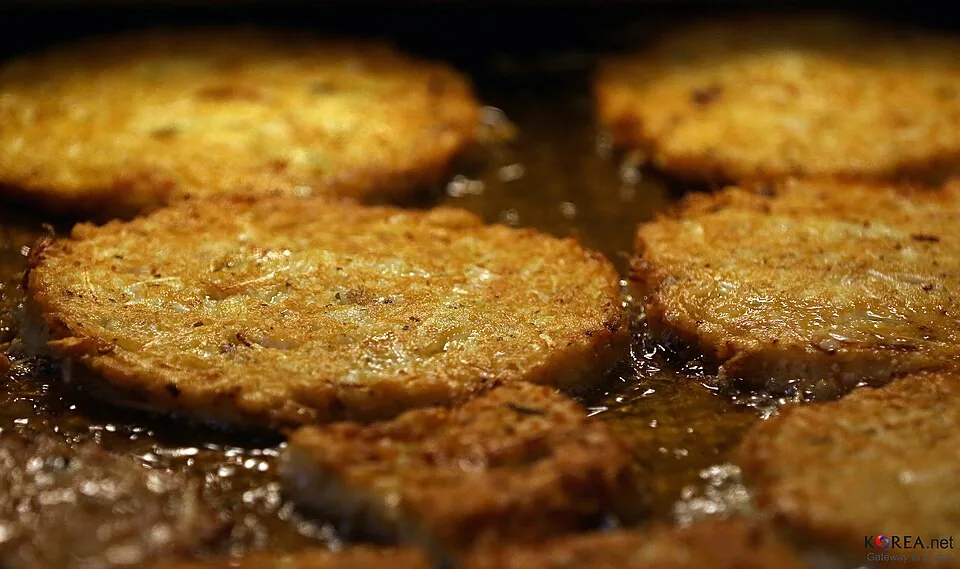
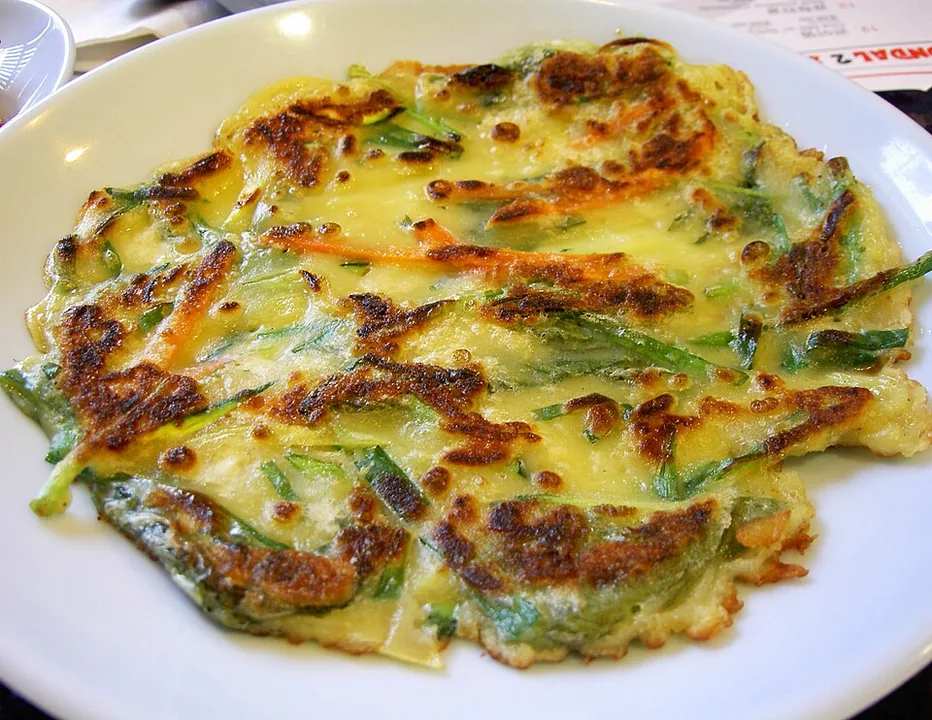
Batter contains wheat and often egg. Seafood versions can include squid, shrimp and shellfish. Photo: Korea.net / Korean Culture and Information Service · CC BY-SA 2.0 · resized 17 · Seoul markets Bindaetteok 빈대떡 A crisp market plate Mung-bean pancake is fried on a griddle and usually shared; eat it while hot with the onion dipping sauce.
It can contain pork, kimchi and mung bean, and is fried near other foods. Do not assume gluten-free preparation. Photo: Korea.net / Korean Culture and Information Service · CC BY-SA 2.0 · resized 18 · Nationwide Bossam 보쌈 A less smoky pork dinner Sliced boiled pork is wrapped with cabbage or leaves and eaten with kimchi, garlic and sauce.
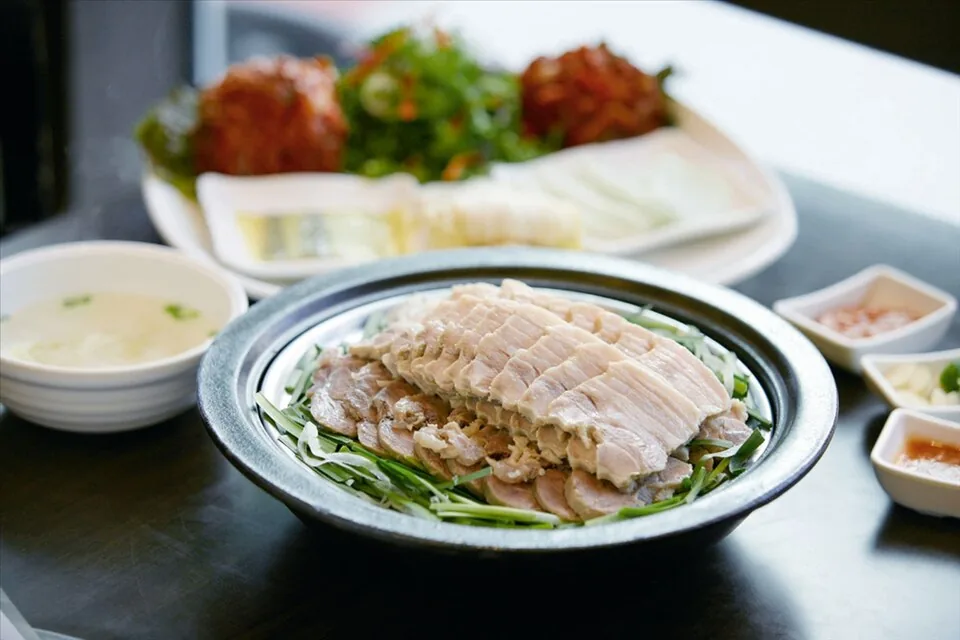
Usually sold as a shared set and always pork unless clearly stated otherwise. Shrimp paste and fish sauce may accompany it. Photo: Daniel Moskowitz · CC0 · resized 19 · Coastal cities · Andong salted style Grilled mackerel 고등어구이 A rice-and-side-dishes meal The fish is served whole or split with rice and banchan; separate bones carefully before eating.
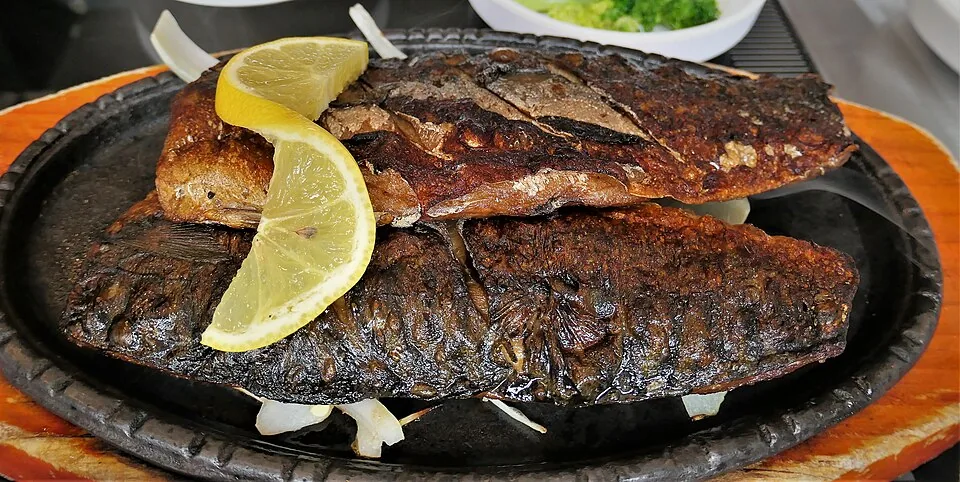
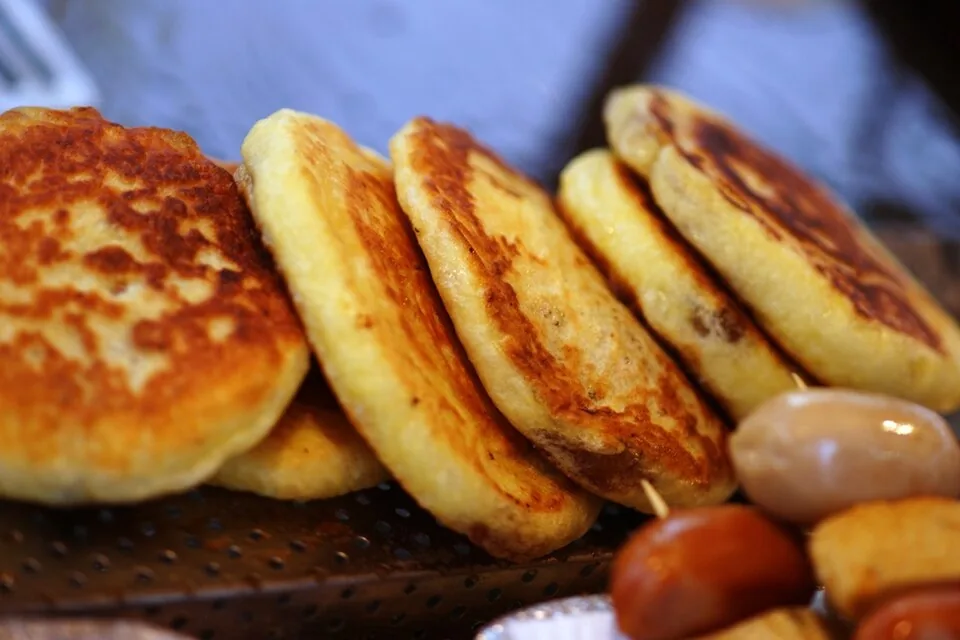
Contains fish and can be salty. Shared grills and side dishes are not controlled for allergen cross-contact. Photo: Korea.net / Korean Culture and Information Service · CC BY-SA 2.0 · resized 20 · Nationwide · seeded style in Busan Hotteok 호떡 A warm street dessert The filled pancake is served extremely hot; Busan's ssiat-hotteok adds a seed mixture after frying.
Usually contains wheat, sugar and oil; nuts or seeds may be present. The molten filling can burn. Places that wrote their own listing Restaurants, cafés and shops added by the people who run them, reviewed before they appear. Travellers rate them; the owner cannot rate their own.
Browse owner listings → List your restaurant →